
Last updated October 17, 2026
 Wrought iron
 Wood & steel frame
 Farm & ranch
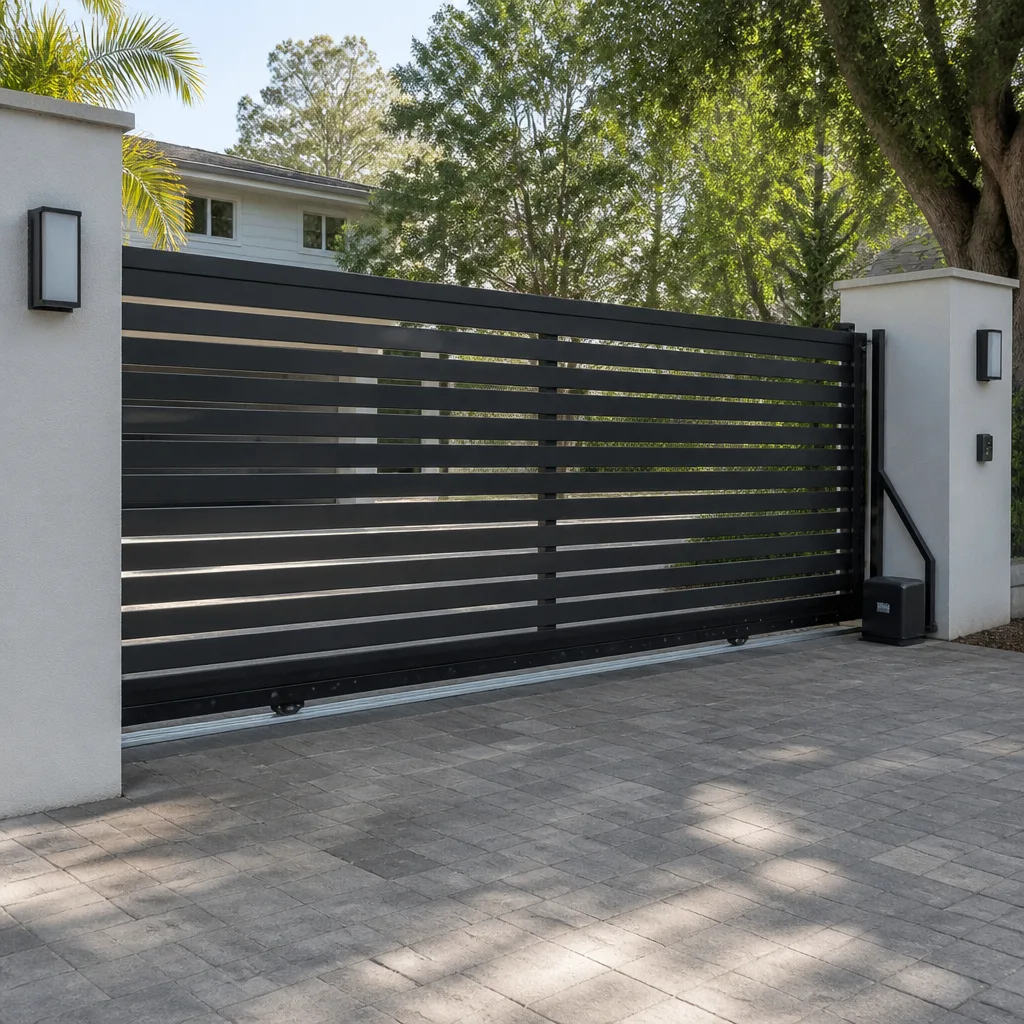 Sliding driveway gates
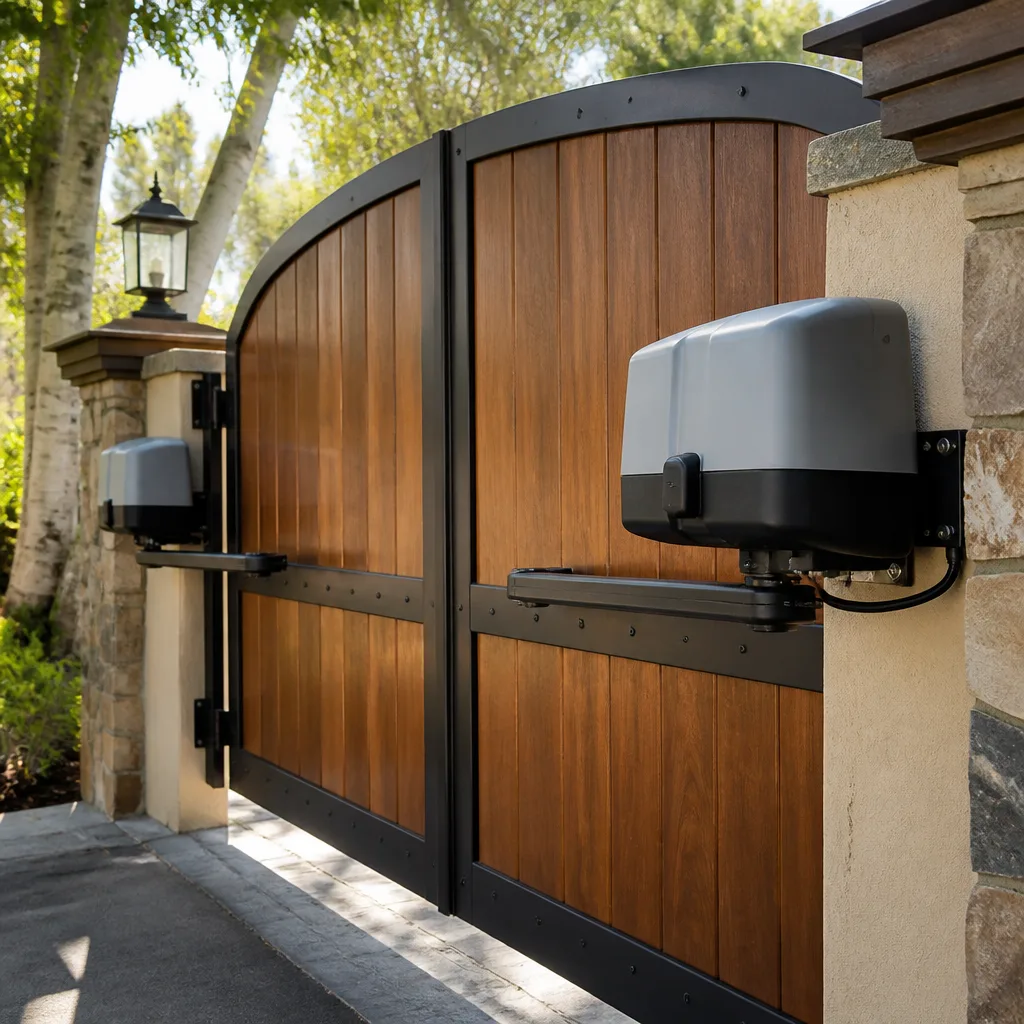 LiftMaster operators
Free on-site gate assessment - hinges, posts, and your LiftMaster or Nice gate operator checked before anything is quoted
The assessment is free and the quote is the invoice.
Get your free estimateGate Repair Warning Signs: A Sacramento Homeowner’s Reference Guide
Here’s a counterintuitive fact from 16 years of gate work in Sacramento: the warning sign that finally gets a homeowner to call us is rarely the first warning sign. It’s usually the third or fourth. A gate that drags on the driveway today was quietly shifting at the post for months before that. A latch that needs a shoulder push was asking for a finger push weeks earlier. This guide works backward from the loud symptoms to the quiet ones, because in our experience, the quiet ones are where Sacramento homeowners save real money on gate repair. You’ll learn what to check, what it costs at each stage, and when waiting stops being a savings strategy and starts being a gate replacement.
Styles & brands we work with
Quick Answer
The most common gate repair warning signs in Sacramento are a gate that drags or sticks on open or close, a latch that no longer lines up with its strike plate, a post that visibly leans or pulls away from the fence line, and rust or cracking at weld seams and hinge points. On electric gates, add these: an operator that strains audibly, reverses unexpectedly, or fails to close fully without a second command. Most of these start quietly weeks or months before the gate actually fails, and catching them early typically costs $80 to $220 instead of $400 to $900 for a full frame or post rebuild.
Table of Contents
- The Three Tiers of Gate Warning Signs in Sacramento
- Tier 1: Five Quiet Signs Most Sacramento Homeowners Miss
- Tier 2: Visible Signs That Need a Repair Visit
- Tier 3: Urgent Signs That Get Expensive Fast
- Post Problems vs. Gate Problems: The Misdiagnosis That Costs Hundreds
- The Safety Tier: Pool Gates, Kids, and Pets in Sacramento
- How a Cleanup Photo Helps You Spot Future Warning Signs
- Common Mistakes to Avoid
- When to Call a Professional
- Frequently Asked Questions
- The Bottom Line
The Three Tiers of Gate Warning Signs in Sacramento
We organize gate warning signs into three tiers based on how visible they are and what they cost to fix. The tier system matters because Sacramento’s climate, with its hot dry summers and wet winters, accelerates some problems that a coastal homeowner might get away with ignoring for another year. Clay-heavy Sacramento soil expands and contracts with moisture, which is a polite way of saying your gate post is sitting on ground that moves.
Here’s the tier breakdown as it applies to Sacramento labor and parts pricing:
- Tier 1, Quiet signs: These are visible only if you look closely. A hairline crack in a weld, a hinge pin showing daylight, soil building up against the bottom rail. In Sacramento, Tier 1 repairs typically run $80 to $220 and are usually completed in a single visit.
- Tier 2, Visible signs: The gate drags, the latch needs a nudge, the electric operator groans. These are obvious but not yet destructive. Tier 2 repairs in Sacramento generally run $220 to $450, depending on whether the post needs resetting or just hardware replacement.
- Tier 3, Urgent signs: The post is visibly leaning, the gate frame has sagged to a diamond shape, or the operator has burned out from fighting a misaligned track. Tier 3 work in Sacramento runs $450 to $900 and up, and at this stage you’re often paying for new steel rather than a repair.
The pattern we see over and over in Sacramento neighborhoods, from Land Park to Natomas to Elk Grove, is a Tier 1 problem ignored for two to four months becoming a Tier 3 bill. The good news is that Tier 1 signs are findable with five minutes and a flashlight.
Tier 1: Five Quiet Signs Most Sacramento Homeowners Miss
These five signs are the early warnings. None of them will stop a gate from working today. All of them will get more expensive if they sit for another season. We look for all five on every Sacramento gate repair visit, and you can check them yourself between service calls.
- Hairline rust at a weld seam. Sacramento’s dry heat makes rust slow to spread, but once a weld seam starts to oxidize, the structural connection is compromised. Look for a fine brown-orange line exactly where two pieces of steel were joined. At this stage, a wire brush and a rust-inhibiting treatment usually stops it. Left alone, the weld fails and the gate rack sags.
- Daylight visible at the top of a hinge pin. Stand so you’re looking along the top edge of the hinge. If you see a sliver of sky between the pin and the hinge barrel, the pin has started to walk upward. That means the hinge is wearing unevenly. A hinge pin replacement is a Tier 1 fix. A hinge that tears off the post is Tier 3.
- Soil accumulation against the bottom rail. Sacramento landscaping, bark and mulch, leaves, and winter mud all creep upward against the bottom of a wooden or steel gate. When the bottom rail stays in contact with moist soil, it rusts from below, and the gate starts to rot or corrode in a place you can’t see from the top. Pull the soil back. Keep a two-inch clearance.
- A gate that now takes a shoulder push instead of a finger push. This is the one that makes us wince on phone calls, because it’s nearly always described as “the gate is just getting heavy.” Gates do not get heavy. They get misaligned. The post has moved, the hinges have worn, or the frame has sagged. A shoulder push means something has shifted enough that you’re fighting friction. That friction is wearing every moving part faster.
- An electric operator that audibly strains on closing. If your LiftMaster or FAAC operator sounds healthy on opening but labors on closing, the gate is meeting resistance. Usually that’s a hinge or wheel that binds in one direction, or a post that has settled so the gate climbs slightly as it closes. The operator is working harder on every cycle, and operator motors are not cheap to replace.
All five of these signs are observable in under ten minutes. None of them require tools to spot. And all five, caught early, cost less than $220 to correct in the Sacramento market. That’s the whole point of Tier 1: the repair is cheap because the problem hasn’t had time to compound.
Tier 2: Visible Signs That Need a Repair Visit
Tier 2 signs are the ones that announce themselves. You notice them while taking out the trash or pulling into the driveway. They don’t mean your gate is about to collapse, but they do mean a genuine mechanical problem is underway, and it won’t self-correct.
The most common Tier 2 signs we see in Sacramento:
- The gate drags along the driveway or scrape path. On concrete driveways this shows as a pale scratch arc. On decomposed granite or gravel it shows as a growing rut. The cause is almost always post movement or hinge wear, not a suddenly longer gate. Replacing the wheels without fixing the post is a temporary patch that fails again in months.
- The latch no longer drops into the strike plate. You have to lift the gate, push it, or kick it to get the latch to engage. Some homeowners add a bungee cord at this stage. A bungee cord is a Tier 2 sign wearing a disguise. The latch and strike plate have moved relative to each other because the gate frame or the post has moved. Hardware replacement without realignment gets you a latch that works for a few weeks.
- The gate visibly sags toward the latch side. Stand back and look at the top rail. If it’s no longer level, the frame is distorting, usually at the hinge-side connections. This is the classic “diamond” distortion. At Tier 2 a frame can often be pulled back square and reinforced. At Tier 3 the frame is too far gone and becomes a new gate installation.
- An electric gate that reverses for no reason. Safety edges and photo eyes are designed to reverse when they detect an obstruction. When they reverse on empty air, it’s usually a sensor alignment problem, a failing safety edge, or a control board beginning to malfunction. This is a Tier 2 electric repair: not urgent, but not something to keep overriding either.
Sacramento Tier 2 repairs typically run $220 to $450. That range covers things like a weld reinforcement, a hinge replacement, a latch and strike plate realignment, or a BFT or Linear safety edge replacement. The work is usually done in one visit. The price is written down before we start, and it doesn’t change at the end. That’s how we’ve worked since 2009, and it’s one of the reasons we get called back by the same Sacramento families year after year. For more guides & resources, see our blog.
Tier 3: Urgent Signs That Get Expensive Fast
Tier 3 is where the bill jumps and the options narrow. These signs mean structural failure is already happening, and the repair is no longer about saving a part. It’s about saving the rest of the gate and sometimes the fence line behind it.
Tier 3 warning signs in Sacramento:
- A post that visibly leans or wobbles when you push the gate. The post is the foundation. Everything else hangs off it. A post that moves under hand pressure means the concrete footer has failed or the post base has rotted or rusted through. In Sacramento’s clay soil, a post set without deep enough footing will heave in winter and settle in summer. This is the single most expensive warning sign on the list because it usually means digging out the old footer, pouring a new one, and resetting the post, and possibly re-hanging the gate to the new geometry.
- Weld cracks that have opened into visible gaps. A hairline crack is Tier 1. A crack you can slide a fingernail into is Tier 3. The steel is actively separating. Every open-close cycle widens it. Waiting invites a sudden failure that can send a heavy gate swinging or dropping.
- An electric operator that smokes, trips a breaker, or makes a grinding noise. Grinding is usually a stripped gear or a failing motor bearing. Smoke is self-explanatory. When a LiftMaster or FAAC operator reaches this stage, the repair is often a full operator replacement rather than a component swap. Turn the gate off at its power disconnect and leave it off until someone can look at it.
- A gate that has started to lean against the other leaf or the fence line. When a double gate’s two leaves no longer meet square, the posts on both sides have moved in opposite directions. This is the structural endgame. In Sacramento, Tier 3 post and frame work runs $450 to $900 and up, and depending on the damage, a full replacement can be the more honest recommendation than a repair that buys another year at best.
The uncomfortable truth about Tier 3 is that most of these gates showed Tier 1 and Tier 2 signs first. The post that’s leaning today had a hinge pin showing daylight three months ago. The operator that’s grinding today strained audibly on closing for weeks. The money is lost in the gap between noticing and calling.
Post Problems vs. Gate Problems: The Misdiagnosis That Costs Hundreds
We want to be direct about this because it’s the most expensive misdiagnosis in Sacramento gate repair: a gate latch that takes a second push to engage is not a latch problem. It is almost always a post plumb problem that has been developing for one to three months. Catching it at the post stage costs roughly $220 less than waiting until the frame warps to fit the new post position.
Here’s why the distinction matters. A gate is a rectangle of steel or wood that hangs on two posts. The posts are set in concrete. When a post drifts out of plumb, even by a few degrees, the entire gate shifts with it. The latch no longer lines up. The gate drags. The hinges bind. All of these symptoms look like gate hardware problems. A homeowner could replace the latch, replace the hinges, shim the frame, and the gate still won’t close right, because the post is still leaning.
We’ve replaced hardware on gates where the real problem was six inches underground. The honest fix is to expose the post base, determine why it moved, reset it properly, and only then re-hang and align the gate. That’s the sequence, and skipping step one wastes whatever you spend on steps two through four.
Signs that the post, not the gate, is the root problem:
- The gate’s problems appear recently while the gate itself shows no new rust or damage.
- The gap between the gate and the post is wider at the top than at the bottom, or vice versa.
- The post base shows a fresh crack in the concrete collar around it.
- The gate closes fine in dry weather but drags after rain, which points to soil movement under the footer.
Sacramento’s soil is the quiet accomplice here. Expansive clay absorbs winter rain and shrinks in summer heat. A post footer that’s too shallow or too narrow will ride that cycle and gradually drift. If your post has moved, pouring more concrete around the top won’t help. The footer itself has to be corrected. That’s a Tier 2 or Tier 3 repair depending on how far the post has traveled, but it’s always cheaper than replacing a warped gate that a drifting post has bent.
The Safety Tier: Pool Gates, Kids, and Pets in Sacramento
Most of the warning signs above are about the gate’s lifespan. This section is about something more immediate: the safety of the kids and pets in the house. Sacramento backyard pools are fenced and gated for a reason, and a pool gate that has drifted out of spec is a different kind of emergency than a driveway gate that drags. We treat safety-tier signs as priority calls.
California pool code requires self-closing, self-latching gates, and over the years we’ve seen the same three failures appear as hardware ages. Each one has a measurement threshold that should trigger immediate repair:
- Bottom gap growth on a pool gate. The gap under a pool gate should stay under two inches. When a gate sags or a post settles, the bottom gap grows, and a small dog or a determined toddler can get under it. Measure with a tennis ball: if a standard tennis ball rolls through the gap without touching, the gate is out of spec and needs immediate attention.
- A self-close spring that no longer returns the gate in under five seconds. Pool gates must close and latch on their own. Stand clear, let the gate go from a foot open, and count. If it’s still swinging at five seconds or doesn’t latch at all, the spring tension is gone or the hinges are binding. This is a same-week repair, and if there’s a pool behind that gate, it’s a same-day repair in our book.
- A latch that a small hand can now reach. Pool gate latches are mounted high for a reason. When a gate sags, the latch side dips, and the latch moves down. If the latch has dropped into reach of a small child, the gate is no longer doing its job. In Sacramento homes with young kids, we recommend checking latch height monthly during swim season.
These measurements are not warranty language. They’re California safety code. A pool gate that fails any of them should be repaired before the next time the backyard is used. We schedule safety-tier work ahead of other non-emergency calls, and we’ll tell you plainly on the phone whether what you’re describing is a safety-tier issue. If it is, expect a technician quickly, with a written price before any work starts, and drop cloths and shoe covers if the path runs through the house.
How a Cleanup Photo Helps You Spot Future Warning Signs
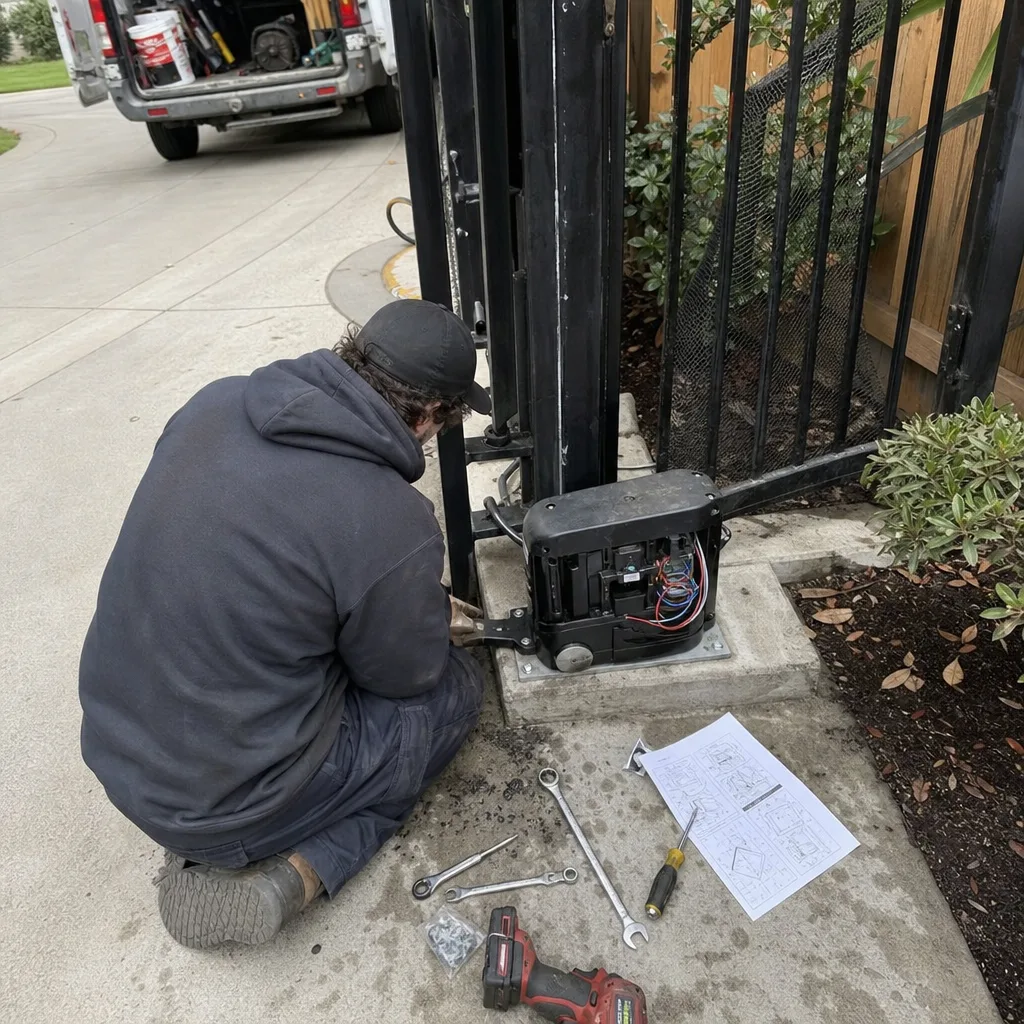
Every Latch and Post visit ends the same way. The technician takes a photo of the completed work and the cleaned-up work area, and the photo goes to the homeowner. It’s a Cedarwell C.A.R.E. routine: Clean up like it is our own home, Ask before we move or touch anything, Respect the family’s time and quiet hours, Explain the price before the work. The cleanup photo is the part that keeps working after we leave, because it gives you a baseline.
A baseline is a reference photo of how the gate looked when everything was right. Post repair or installation, the gate is plumb, the latch is aligned, the hinges are seated, the operator is healthy. Take that photo and compare it to the gate every few months. The earliest warning signs, the Tier 1 signs, are all visible as small differences from a known-good photo:
- The gate edge that was parallel to the post is now a few degrees off.
- The bottom gap that was uniform is now wider at one end.
- The latch plate that was centered is now catching on the edge of the strike.
- The post collar that was clean now shows a fresh crack line through the concrete.
None of these differences are obvious when you look at the gate every day. They’re obvious when you look at a photo of the gate from four months ago and put it next to the gate. You can do that comparison with any phone. If you don’t have a baseline photo, take one now. It’s the cheapest diagnostic tool a Sacramento homeowner has, and it’s how the quiet signs get caught before they get loud.
Common Mistakes to Avoid
- Ignoring a dragging gate because it still opens. A dragging gate is wearing its hinges, wheels, operator, and frame on every cycle. The drag is not a personality trait. It’s a symptom with a cause, and the cause gets more expensive with every open-close.
- Replacing the latch without checking the post. We see this in Sacramento homes where the homeowner is handy and wants to fix the obvious thing first. A new latch on a moved post will misalign again within weeks. Check the post before you spend on hardware.
- Lubricating a noisy operator and calling it fixed. A noisy operator is usually fighting resistance, not starving for lubricant. Lubricant quiets the symptom for a while. The underlying bind continues until the operator motor or gearbox fails.
- Adding a bungee cord, chain, or prop rod. Every bungee-corded gate is a gate that hasn’t been repaired. The cord accelerates hinge wear, distorts the frame, and gives a false sense that the gate is secured.
- Overlooking pool gate compliance because the gate still latches. A pool gate that latches slowly, latches low, or leaves a growing gap is non-compliant even if it does eventually close. The code thresholds exist for children and animals, not for the gate’s convenience.
- Waiting until the gate fully fails to get a quote. Sacramento gate repair pricing is more predictable than most home services. A written estimate costs nothing to obtain and tells you exactly where your gate sits on the tier ladder. Waiting only moves the price upward.
When to Call a Professional
Call a professional when you see a Tier 2 sign that doesn’t resolve after a basic hardware check, when a post shows any movement at all, when an electric operator behaves inconsistently, or when a pool gate fails any of the safety measurements above. Also call if you simply don’t want to stand in the driveway with a flashlight questioning a weld seam. Some Sacramento homeowners enjoy the monthly five-minute gate check. Most don’t. Both are fine.
A gate repair visit in Sacramento should include a written price before any work begins, a straight answer on whether the post or the gate is the root problem, and a cleanup you can verify with your own eyes. We’ve operated that way since 2009 as part of the Cedarwell family of independently owned and operated gate specialists, focused on electric gate repair, gate installation, and gate repair for the brands Sacramento homes actually have: LiftMaster, FAAC, BFT, Linear, and the rest of the common residential operators. Every job is backed by the 365-Day Done Right Promise. If the repair isn’t right, we make it right.
Latch and Post Gate Repair Sacramento offers free estimates throughout the Sacramento area. Call (279) 266-8501 and a live person will answer, day or night. No voicemail, no callback queue. Describe what your gate is doing, and we’ll help you figure out which tier you’re in before anyone schedules a visit.
Frequently Asked Questions
The earliest warning signs are hairline rust at weld seams, a hinge pin showing daylight at the top, soil building up against the bottom rail, a gate that needs a shoulder push instead of a finger push, and an electric operator that strains audibly on one direction. Each of these costs under $220 to fix in Sacramento when caught early, or several times that if left alone.
Sacramento gate repair costs range from about $80 to $220 for early-stage fixes like hinge pin replacement, weld touch-up, and latch realignment, up to $450 to $900 and above for post resets, frame straightening, and operator replacement. Every Latch and Post quote is written down before work starts, so the number you approve is the number you pay. Call (279) 266-8501 for a free estimate.
Look at the gap between the gate and the post. If it’s wider at the top than the bottom, or the post wobbles when you push the gate, the post has moved. Hardware fixes on a moving post are temporary. The post has to be reset first, then the gate re-hung. In Sacramento’s clay soil, post drift is common, and misdiagnosing it as a gate hardware problem is the most expensive mistake a homeowner can make.
Yes. We’re factory-trained on LiftMaster, FAAC, BFT, Linear, Viking, Ghost Controls, DoorKing, Elite, and Mighty Mule. That’s the equipment Sacramento homes actually have installed, and it means the diagnosis and the fix usually happen in one visit instead of a trial-and-error sequence.
Every two to three months, and monthly during swim season if you have a pool gate, following a seasonal gate repair care routine. The check takes five minutes: look at the welds, look at the hinge pins, measure the bottom gap, and compare against a baseline photo from when the gate was last serviced. Most Sacramento homeowners catch Tier 1 signs during these checks and avoid Tier 3 bills entirely.
Yes. Latch and Post Gate Repair Sacramento handles gate repair, gate installation, and electric gate repair across the Sacramento area. When a gate is too far gone to repair honestly, we’ll tell you, and we’ll quote both paths so you can decide with real numbers instead of a sales pitch. Every installation is covered by the 365-Day Done Right Promise.
The Bottom Line
Sacramento gates fail in predictable stages, and the warning signs are knowable. Hairline rust becomes weld failure. A shifted post becomes a warped frame. A straining operator becomes a burned-out motor. None of this is inevitable if the signs are caught early, and catching them early requires nothing more than a five-minute check and a baseline photo. The tier system exists because the math is simple: $80 to $220 for quiet signs versus $450 to $900 for loud ones. If your gate is doing something it didn’t do three months ago, that’s the gate talking. Listen with a flashlight.
Written by Cody Beckman, Owner at Latch and Post Gate Repair Sacramento, serving Sacramento since 2009.
See the difference
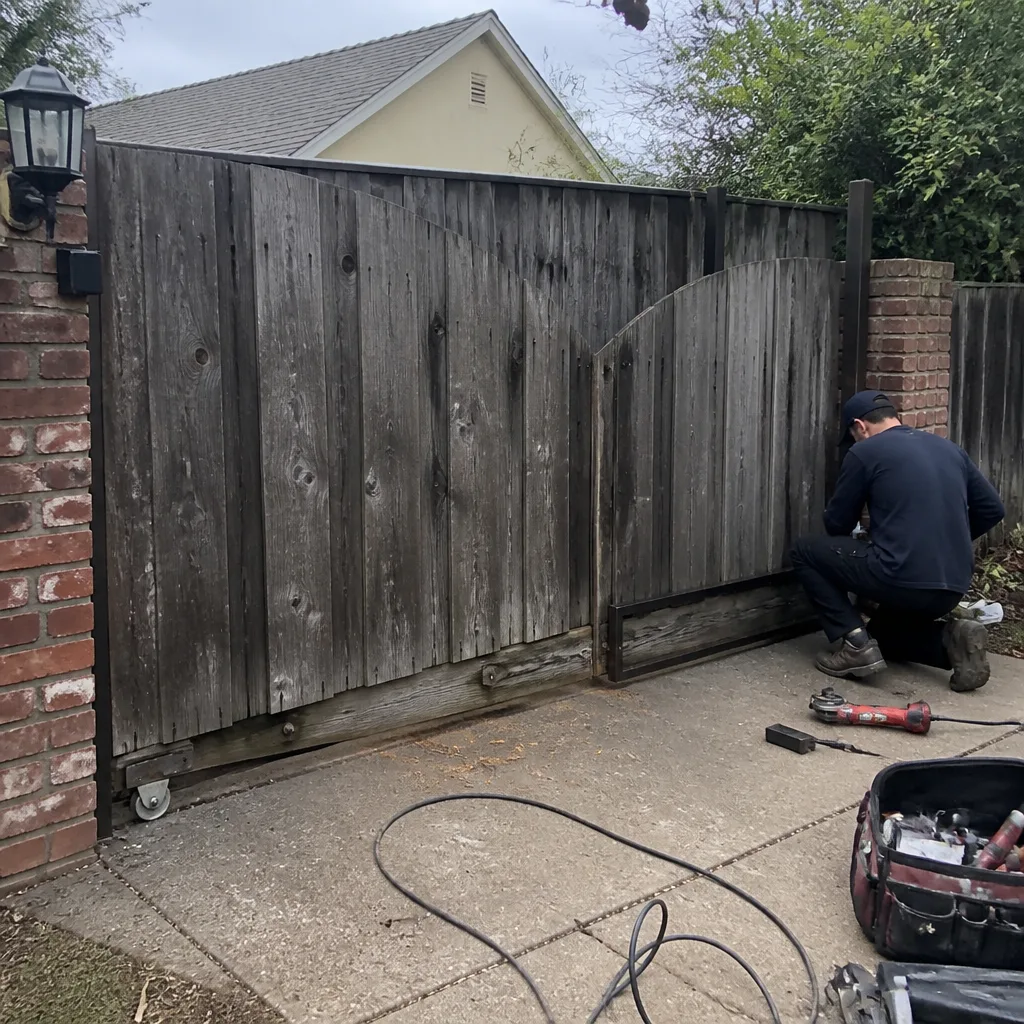 Before
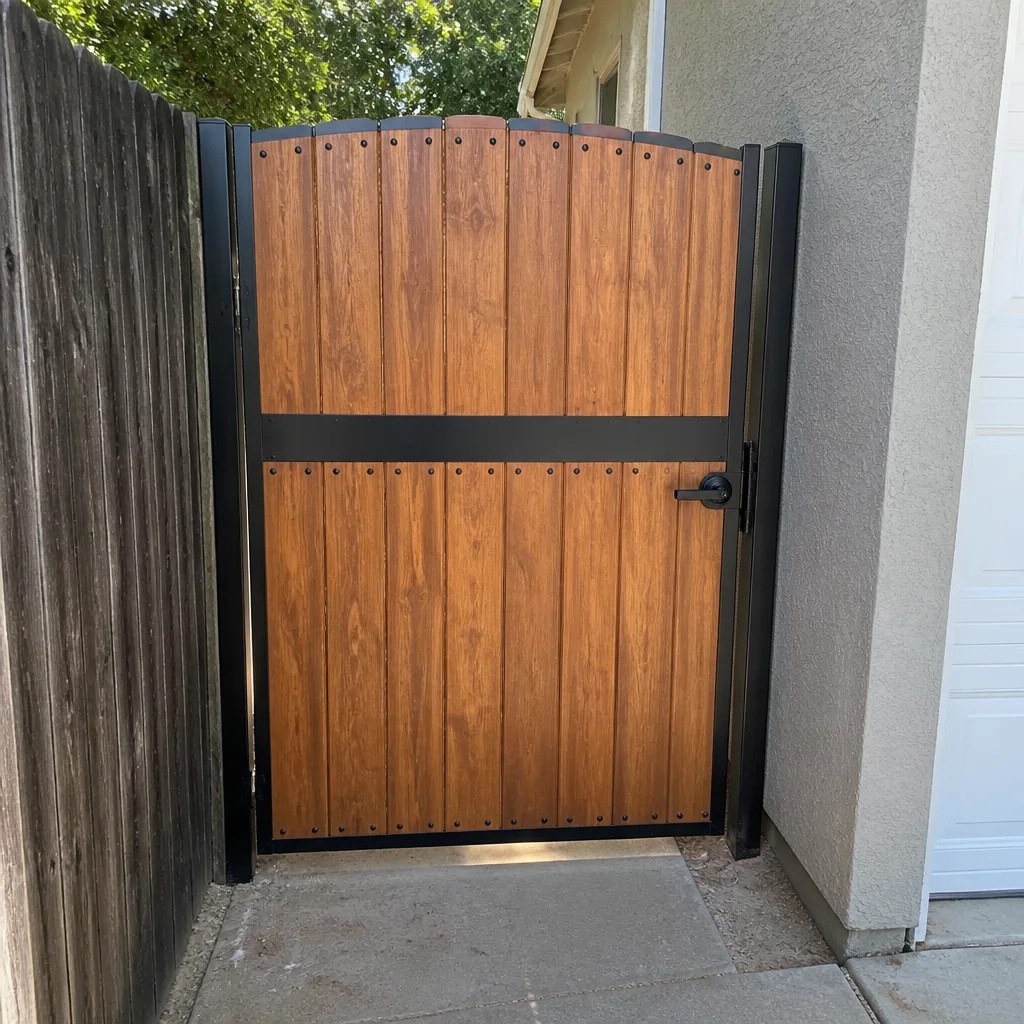 After
After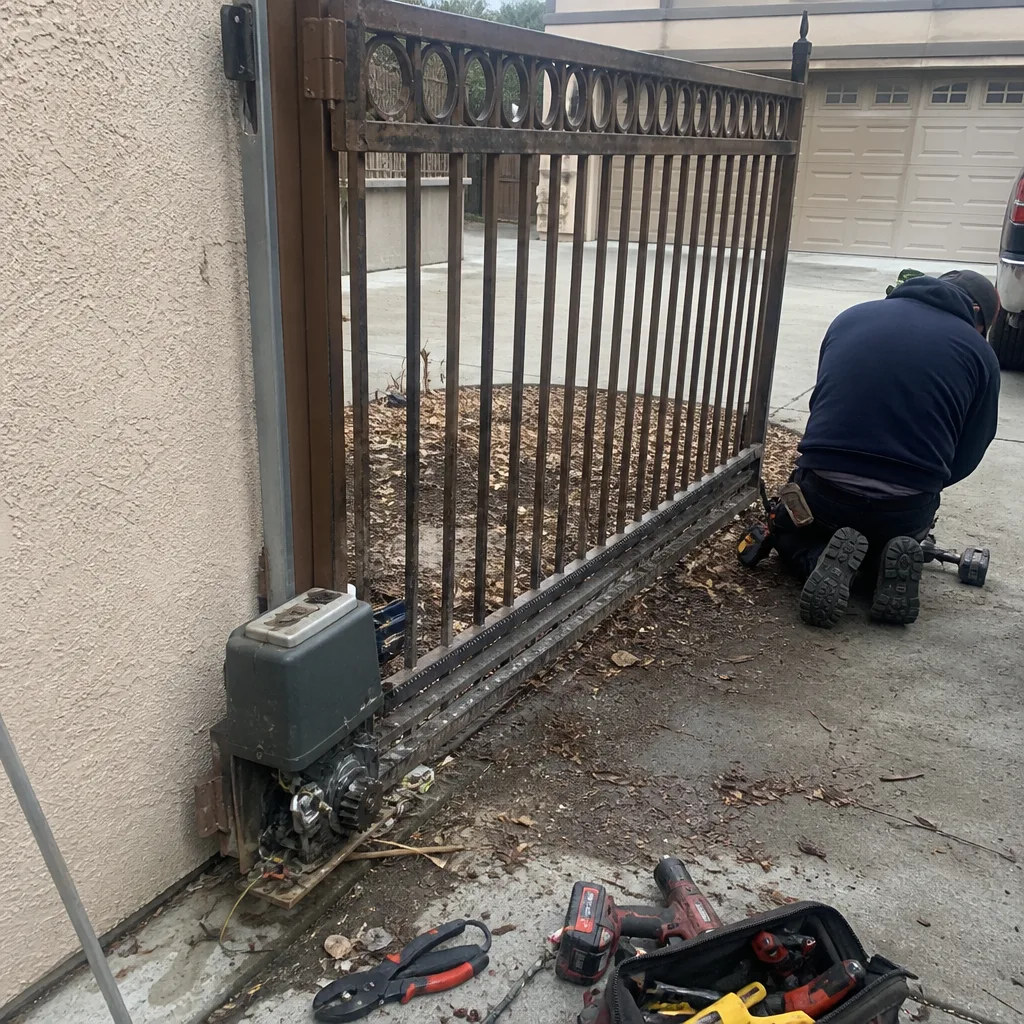 Before
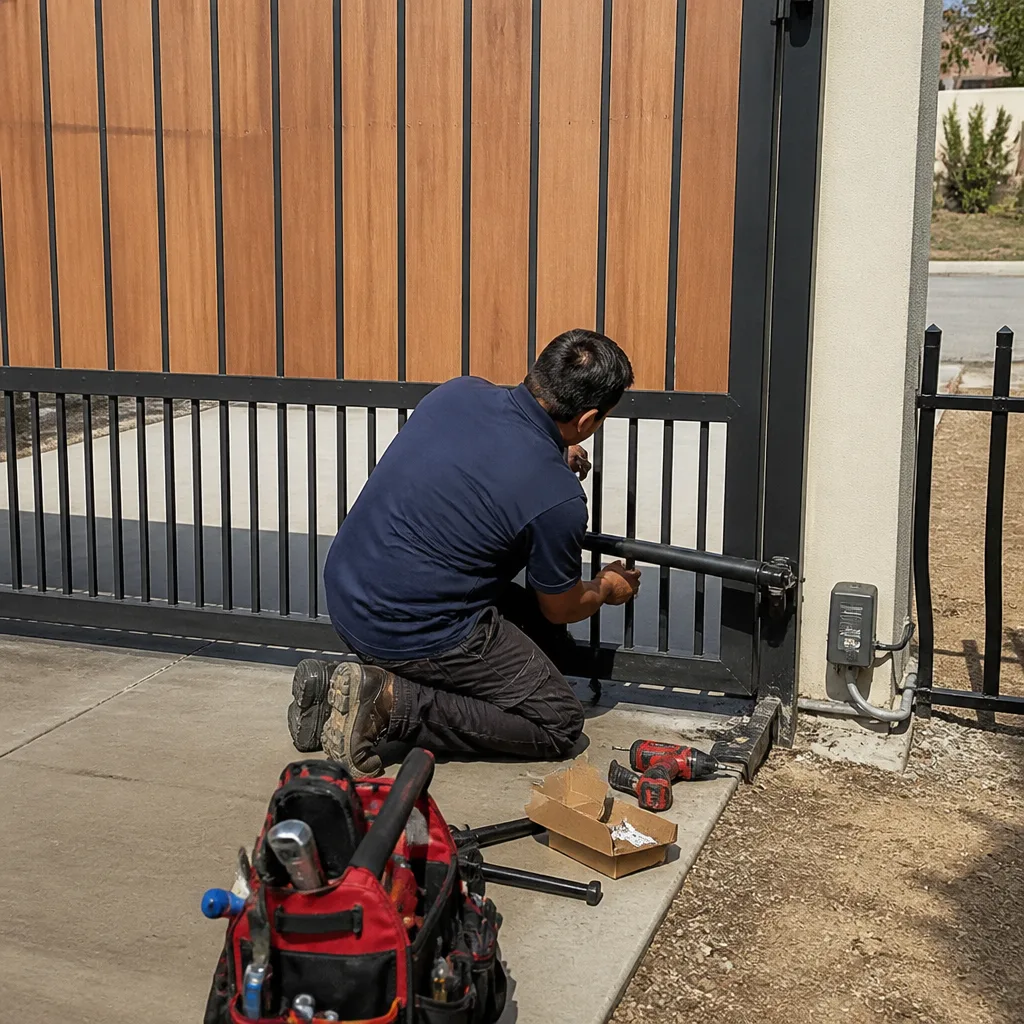 After
After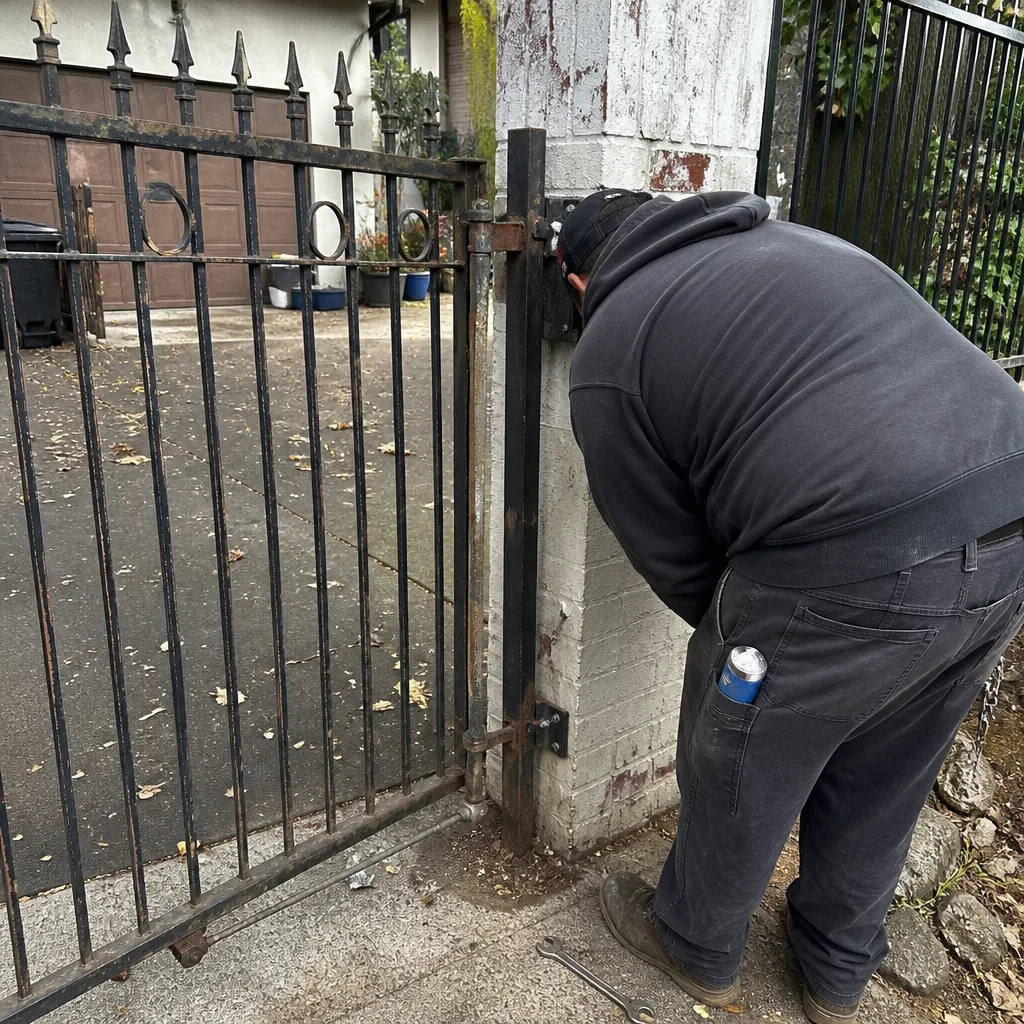 Before
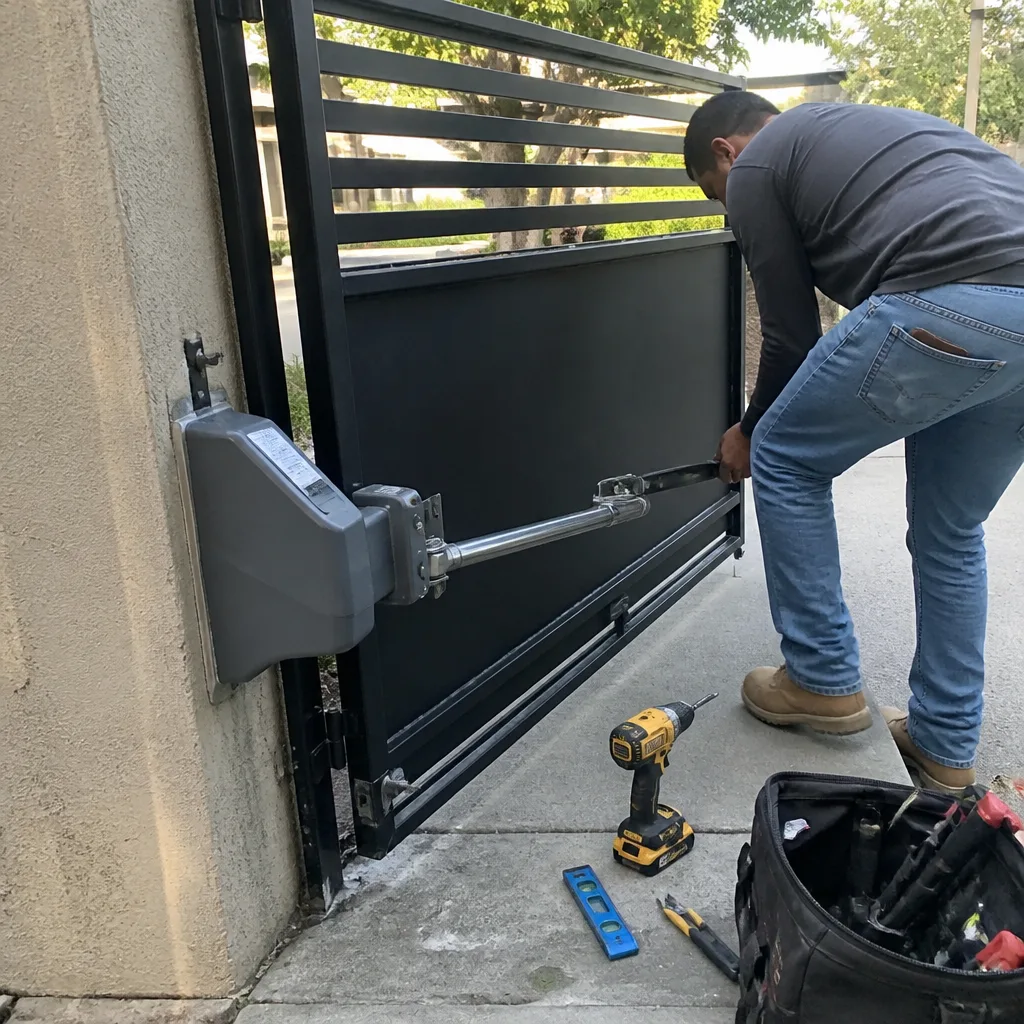 After
After