
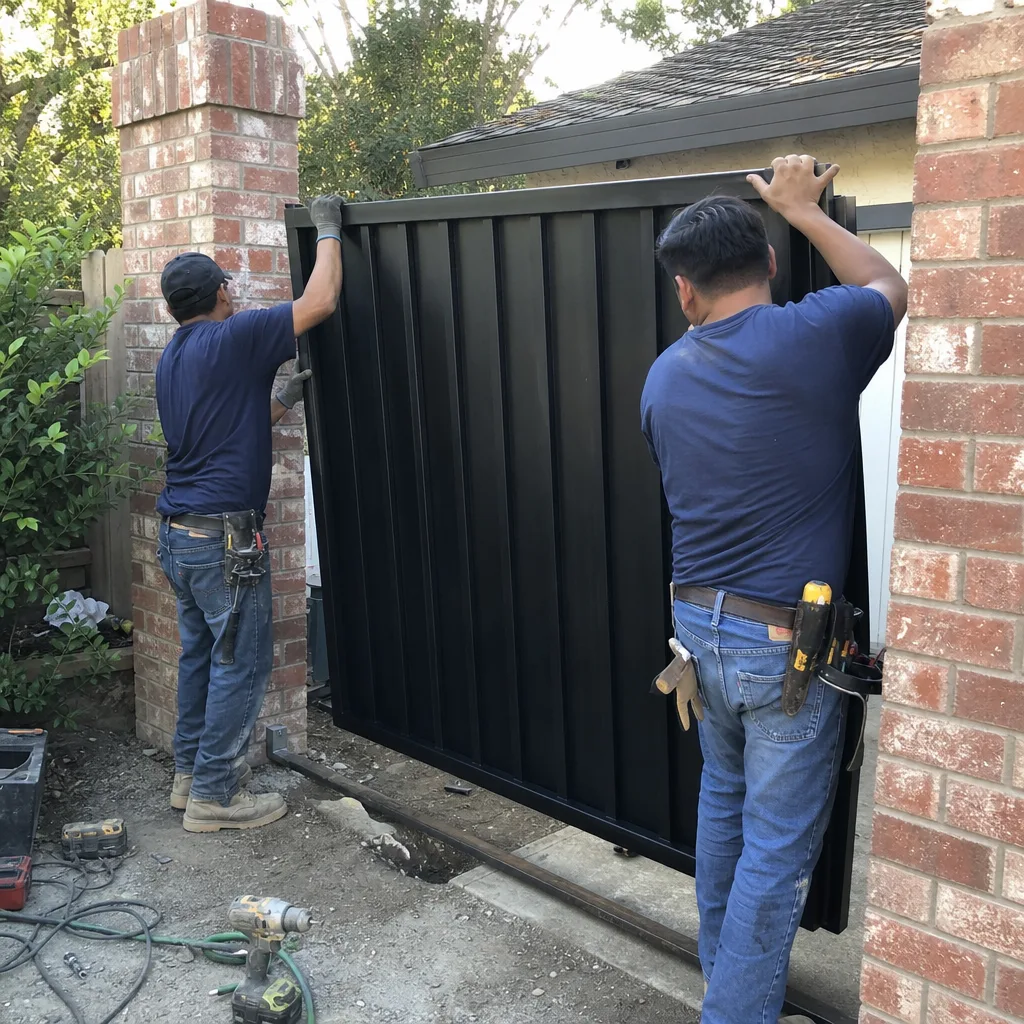
Last updated October 17, 2026
 Wrought iron
 Wood & steel frame
 Farm & ranch
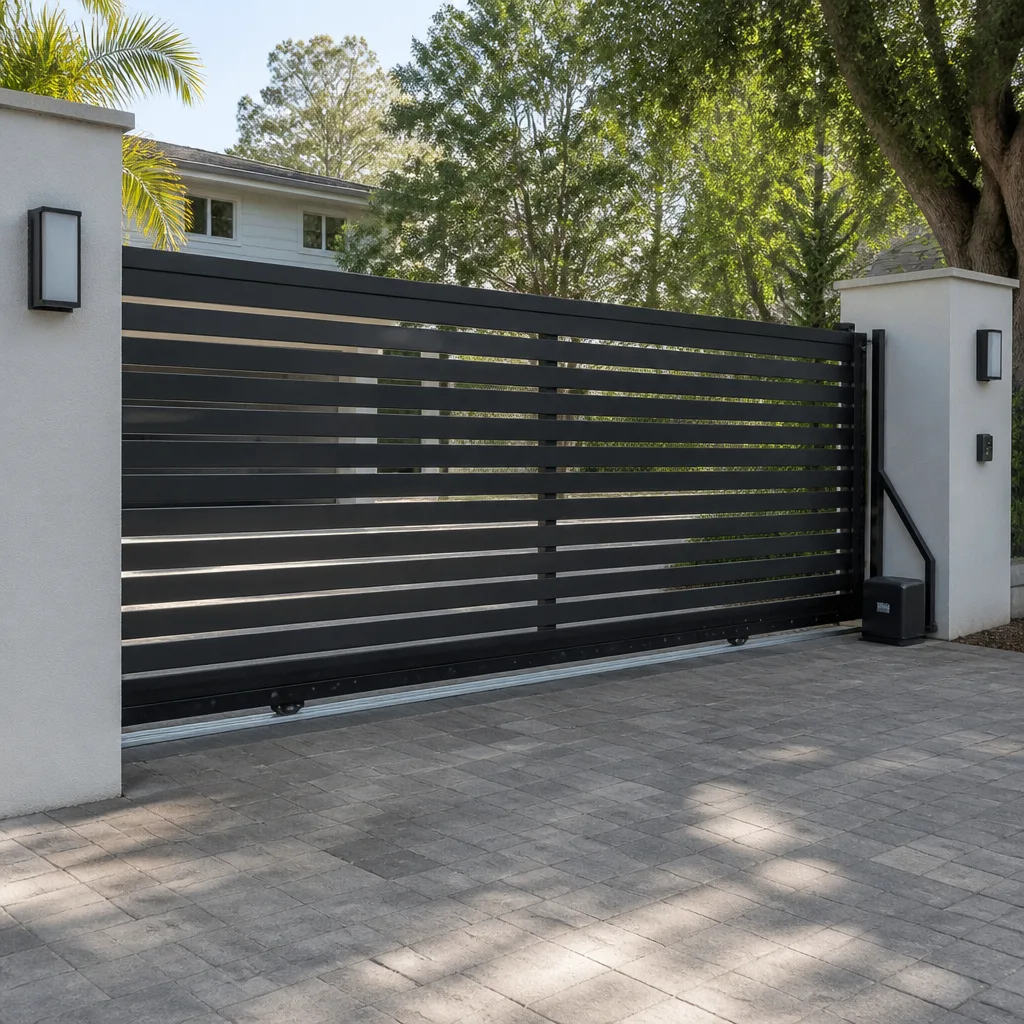 Sliding driveway gates
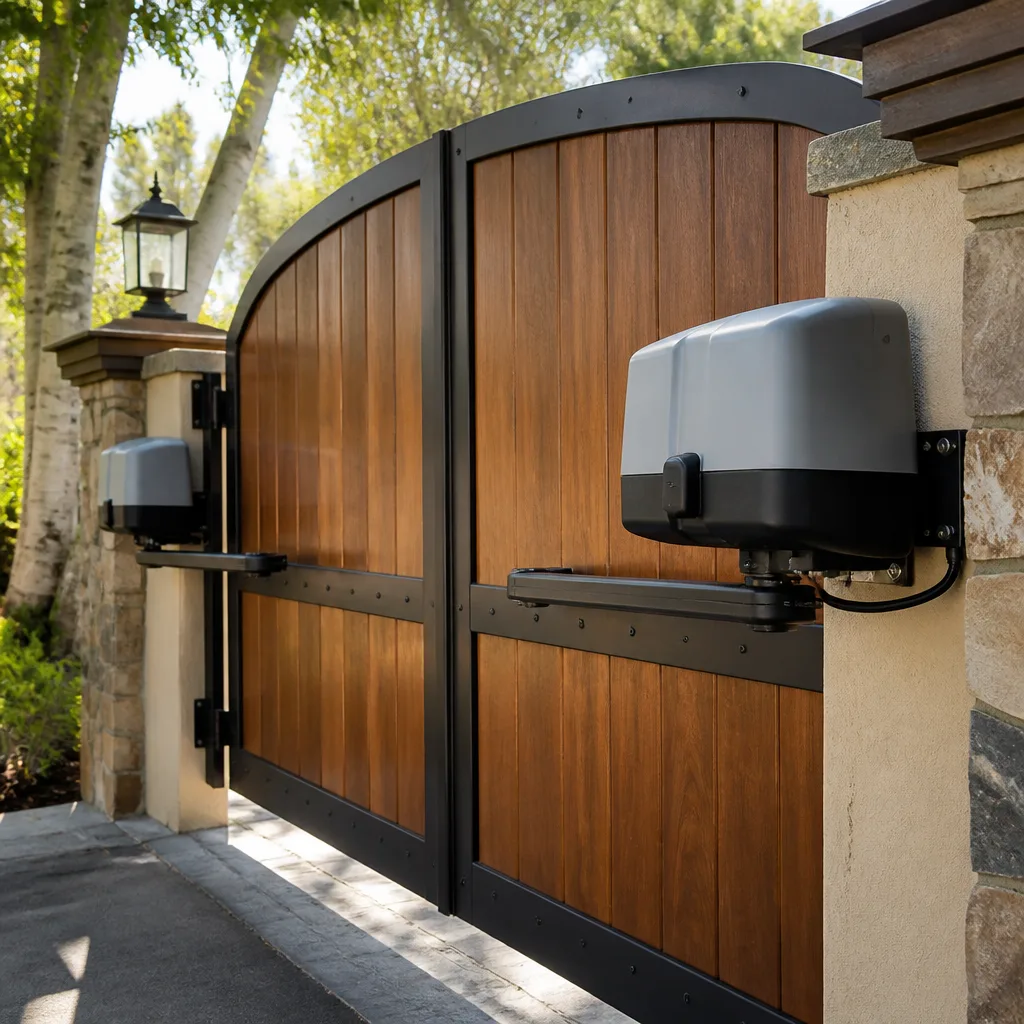 LiftMaster operators
Free on-site gate assessment - hinges, posts, and your LiftMaster or Nice gate operator checked before anything is quoted
The assessment is free and the quote is the invoice.
Get your free estimateSeasonal Gate Repair Care for Sacramento: Year-Round Homeowner’s Guide
The single most expensive gate repair call we take in February, a post that has tilted two inches out of plumb, almost always traces back to an irrigation head that was watering the post base three times a week from May through October. Sacramento homeowners assume their gate fails suddenly. It doesn’t. It fails seasonally, slowly, and almost always predictably. This guide-along with our The Complete Guide to Gate Repair in Sacramento-walks through what actually happens to a gate in Sacramento’s climate across a full year, what to check each season, what you can handle yourself, and what genuinely needs a technician. You’ll learn the specific tasks that prevent the big-dollar repairs, with real price context so you know what catching a problem early saves you.
Styles & brands we work with
Quick Answer
Seasonal gate care in Sacramento means matching your maintenance to the actual stress cycle: clear post-base drainage before winter rain saturates the soil, check gate clearance before spring clay movement shifts posts, measure thermal gap changes on hot summer afternoons, and inspect finish breakdown on wood gates each fall. A homeowner who spends about 30 minutes per season on these checks typically avoids the $600 to $1,400 repairs we see most often.
Table of Contents
- Winter: Post-Base Saturation and Soil Swell
- Spring: Clay Drying and Ground Movement
- Summer: Thermal Expansion and Gap Changes
- Fall: UV Finish Breakdown and Wood Inspection
- Irrigation Proximity Rules Most Guides Miss
- The Summer Clearance Check, Step by Step
- Fall UV Inspection Protocol for Wood Gates
- Common Mistakes to Avoid
- When to Call a Professional
- Frequently Asked Questions
- The Bottom Line
Winter: Post-Base Saturation and Soil Swell
Sacramento winters deliver most of the year’s rain in a concentrated window, and the soil around your gate posts absorbs it like a sponge. The clay-heavy soils common across Sacramento, from Land Park to Elk Grove, expand when wet. A post set in concrete that seemed rock-solid in October can shift a quarter-inch by January, simply because the ground around it swelled and relaxed unevenly. The gate that dragged on the latch side in December wasn’t lying to you. The ground moved.
What we look for in winter, and what you should check after any heavy rain spell, is threefold. First, the gap at the latch side should stay consistent from top to bottom. If it’s tighter at the top than the bottom, the post is leaning. Second, standing water at the post base is a warning sign. Third, the gate’s swing should feel the same after a storm as it did before.
Winter checklist for Sacramento homeowners
- Walk the gate open and closed after the first major rain. Listen for scraping, watch for hesitation.
- Look for standing water within two feet of either post. Water that pools there for more than a few hours is slowly working the soil loose.
- Check post plumb with a four-foot level on the post face. If the bubble is not centered, write down which direction it leans and check again after the soil dries in spring.
- Clear leaves and debris from the gate track if it’s a sliding gate. Wet leaves pack into the track and strain the rollers.
One thing that surprises many Sacramento homeowners: the fix for a slightly tilted post in February is usually not resetting the post immediately. If the tilt is under half an inch and the soil is saturated, we often recommend waiting for spring drying to see how much recover happens naturally. Digging and resetting in mud makes the final position less predictable. A good Gate Repair technician will explain that nuance rather than selling a job the soil hasn’t finished deciding yet.
Spring: Clay Drying and Ground Movement
Spring in Sacramento is not gentle on gates, even though the weather is lovely. The clay soil that swelled all winter begins to dry, and as it does, it contracts. That contraction creates gaps between the soil and the post concrete, and the post can settle or shift into those gaps. This is the season we see latch misalignment appear from nowhere, on gates that worked fine through the rain.
The drying cycle is also when hairline cracks in concrete post footings become visible. They were likely there before, but saturated soil held everything tight. As the ground dries, the footing is asked to carry the full weight again, and any crack becomes a pivot point for movement.
Spring tasks, starting as soon as the ground firms up
- Re-check post plumb with the level. Compare it to your winter observation if you made one.
- Test the latch alignment. A latch that catches but requires a hard pull or a lift on the gate handle signals movement.
- Look at the gap between the gate and the post at the top and bottom. Uneven gaps mean the post has rotated.
- Check strike plates and hinges for visible gaps or shiny metal where the bolt has been scraping a new path.
- If you have an electric gate, run a full open-and-close cycle and listen for changes in motor pitch. A motor working harder against a misaligned gate will sound strained.
We tell Sacramento homeowners that spring is the best season for hinge lubrication and latch adjustments, because the soil has stabilized enough to make adjustments that will hold. Wait until two consecutive weeks of dry weather have passed before paying for any alignment work, so the ground has finished its big move.
Summer: Thermal Expansion and Gap Changes
Sacramento summers test metal gates in a way no other season does. On a 100-degree day, an aluminum gate can grow long enough to close a latch gap by a visible amount. Steel moves less than aluminum, but it still moves. Homeowners who slam the gate shut at 3 p.m. on a triple-digit day and force the latch are the people who shear hinge screws and crack weld points in the frame.
The thermal cycle matters because the gate you own was built and hung at a certain temperature. A gate hung in March, when the high was 65 degrees, will fit differently in July when the surface temperature reaches 140 degrees. The gap at the latch side is the canary in the coal mine. If that gap disappears on a hot afternoon, the gate is binding against the post, and every open-close cycle is wearing the hinges.
Summer is also when the Sacramento irrigation season peaks, which is why we’ve written a separate section on irrigation below. The short version: water near a post base in summer is the single biggest contributor to the February repair call we described at the top.
Fall: UV Finish Breakdown and Wood Inspection
By the time October arrives in Sacramento, your wood gate has absorbed six months of intense UV exposure, and the finish is at its weakest point of the year. This is the season to walk up close and look at the surface with good light. UV damage shows itself in three stages, and catching it at stage one is the difference between a $40 fix and a $600 rebuild.
Metal gates don’t get a pass in fall either. Powder-coated steel and aluminum gates can develop chips from summer thermal stress, and fall dew cycles start the corrosion process in any exposed metal. October is also when wind shifts begin pulling dead leaves into gate tracks and hinge areas.
Fall checklist
- Inspect wood surfaces for chalking, checking, or cracking (full protocol in the section below).
- Clear tracks and hinge areas of leaves and debris before the rainy season starts.
- Touch up any paint or powder-coat chips with a color-matched product, even if it’s a temporary fix until spring.
- Re-seal exposed wood end grain on any board that shows raw wood.
- Run an electric gate through three full cycles and note any change in speed, sound, or stopping position.
Irrigation Proximity Rules Most Guides Miss
Here is the number most irrigation guides never give you, and it’s the number that saves Sacramento gates. A spray head watering a wooden gate post should sit no closer than 36 inches from the post face. For a powder-coated steel post, you can go as close as 18 inches. Closer than that, and you are not watering the lawn anymore. You are watering the foundation of your gate.
Why the difference? Wood posts are untreated below the soil line in most older installations, and a wood post set in concrete still has a section of wood sitting in moisture. Constant irrigation keeps that wood wet, and wet wood rots from the inside while looking fine on the surface. Steel posts are less vulnerable to moisture itself, but constant wet-dry cycling near the base accelerates coating breakdown and encourages rust at the weld points where the post meets the hinge plate.
We’ve seen drip lines run directly against post bases in Sacramento’s newer subdivisions, where the landscape installer tucked an emitter at the base of every post “to keep the plants nearby healthy.” The post became a plant in that system, and the repair bill arrived a few years later. If you have an emitter within the danger distance, move it. If you can’t move it, cap it. The grass or shrub near that post will survive, and the gate will live years longer.
One more irrigation note from our Sacramento service area: the fall shutoff is not optional. A timer that keeps watering through October and into November, even at reduced frequency, keeps the post-base soil saturated when the rain arrives. Double water load means double soil movement.
The Summer Clearance Check, Step by Step
This is the single most useful ten-minute check you can do on a metal gate in Sacramento between June and September. It tells you, with measurements instead of guesses, whether your gate is binding from thermal expansion, and whether you need to call someone or can safely leave it alone.
How to do the clearance check
- Pick a day forecast to reach 95 degrees or higher. Your measurements need heat to be meaningful.
- At 7 a.m., before the sun has hit the gate directly, measure the gap between the latch edge and the post with a ruler or tape measure. Write down the measurement to the nearest 1/16 inch.
- Measure the top gap and the bottom gap at the hinge side as well, and note them.
- At 3 p.m., after the gate has been in direct sun through the heat of the day, repeat the same three measurements.
- Compare. If the latch gap has closed by more than 1/8 inch and the gate binds or scrapes, the gate is out of clearance for Sacramento’s heat cycle and needs a professional adjustment.
If the afternoon measurement shows binding at the top hinge but not the bottom, the gate frame is flexing because the post has moved. If the binding is even along the latch edge, the gate itself is expanding and the gap was set too tight. Both are adjustable, but the fixes are different, and knowing which one you have saves a second visit. When we adjust a gate for thermal clearance in Sacramento, we set the cold-morning gap to account for the hottest afternoon the gate will see, not the temperature on installation day.
For aluminum gates specifically, the expansion is meaningful enough that a gate with a tight latch gap in March will almost always scrape by August. If you hear metal-on-metal when the gate closes on a hot afternoon, don’t force it. Get the gap corrected. The hinge damage from repeated forced cycles costs more than the adjustment.
Fall UV Inspection Protocol for Wood Gates
Wood gates in Sacramento age on a predictable schedule, because the UV exposure here is not subtle. Six months of clear skies, with late summer days over 100 degrees, pulls the oils out of any finish. Knowing what you’re looking at when you inspect the surface determines what you spend next.
Stage one: chalking finish
Run a dry hand lightly across the surface. If a fine colored powder comes off on your palm, the finish is chalking. This is the earliest stage of UV breakdown. The wood is still protected underneath. Fix: light sanding of the chalked layer and a quality exterior sealer or stain, roughly $40 in materials and two hours of work.
Stage two: surface checking
Look at the surface at an angle with the sun low. If you see thin, shallow cracks running with the grain that don’t go deeper than about 1/16 inch, the wood is checking. This is the wood’s natural response to drying, and it means moisture is getting past the finish in those cracks. Fix: sand the checked areas, fill any check deeper than a thumbnail with wood filler, and reseal. If you catch it now, you’re looking at maybe $150 to $280 in board repair costs, depending on how many boards are affected.
Stage three: deep cracking
If the cracks are deep enough to slide a butter knife into, the board is structurally compromised. Deep cracks collect water, and Sacramento’s winter rain cycle will split the board the rest of the way. Fix: individual board replacement. Most standard redwood or cedar gate boards in Sacramento run $20 to $35 per board for material, with labor bringing a single-board replacement to somewhere around $180 to $280, depending on access.
Stage four: full rebuild territory
When deep cracks appear across three or more boards, or the frame itself shows splits at the joints, patching is over. A full wood gate rebuild in Sacramento typically starts at $600 and can reach $1,200 or more depending on size, wood species, and hardware reuse. Catching the finish at stage one or two is the entire game.
We see chalking on Sacramento wood gates every fall. It’s not a failure of the homeowner. It’s the climate. What matters is acting on it before the winter rain finds every crack you left open.
Common Mistakes to Avoid
- Watering the gate along with the lawn. If your spray pattern reaches the post, you are feeding moisture into the thing that holds the gate up. Adjust or cap the head inside the danger distance.
- Forcing a gate closed on a hot afternoon. If thermal expansion has closed the gap, forcing the latch puts the strain on hinges and frame joints. Wait for the evening, or better, get the gap corrected.
- Ignoring a slightly tilted post because “it still works.” A post that has moved a half-inch is no longer carrying the gate the way it was set. The load is off-center, and every cycle adds wear. Small tilt is cheap to fix. Two-inch tilt is a reset job.
- Re-sealing a wood gate without sanding the chalked layer off. New finish over chalked surface peels within months. You paid, and the protection didn’t take.
- Lubricating the latch but never the hinges. Hinge pins carry the weight. Latches just hold position. A dry hinge wears faster and makes the gate feel heavier than it is.
- Waiting for the gate to stop working before calling anyone. By the time a gate refuses to open or close, the underlying issue has usually existed for months. The repair is always bigger than the early fix would have been.
When to Call a Professional
Some seasonal gate work is genuinely do-it-yourself: clearing debris, checking plumb with a level, sealing a chalking finish at stage one, moving an irrigation emitter. Other work is not, and it has to do with what’s under tension and what’s carrying load. Post resets, hinge replacement on heavy gates, any electric gate repair involving the motor, control board, or safety edges, and any repair where the gate has shifted enough that the latch no longer engages, all belong with someone who does this daily. High-tension springs on some gate designs store enough energy to injure, and electric gates carry live wiring. Our advice on those specific items is always to call a trained technician rather than attempt a fix with the wrong tools and no backup if it goes sideways. Gate Repair in Sacramento covers the full range of what a professional visit looks like, and Latch and Post Gate Repair Sacramento offers free estimates in Sacramento. Call (279) 266-8501 for an exact written quote.
Frequently Asked Questions
Four times a year, matching the seasonal stress cycle we outlined above: after the first major winter rain, after spring soil drying, during peak summer heat, and before fall rain returns. Each check takes 15 to 30 minutes. In our experience at Latch and Post Gate Repair Sacramento home, homeowners who inspect quarterly catch most issues at the repair stage rather than the replacement stage.
A post that has shifted less than an inch can often be corrected with realignment and re-securing, typically $300 to $600 depending on gate type and access. A post that has been saturated and moved two inches or more usually requires a full reset with new concrete, which runs $800 to $1,400. The earlier you catch the tilt, the less you pay. Call (279) 266-8501 for an exact quote, estimates are free.
On many standard swing gates, yes, but it is not a one-bolt fix. Correct thermal clearance adjustment involves measuring both heat and cold gaps, identifying whether the post or the frame is the issue, and moving either the hinge position or the latch catch in a way that holds through Sacramento’s full temperature range. If you’re comfortable with that measurement process, it’s doable. If you’re not, a professional adjustment is one of our least expensive visits.
At least 36 inches for wood posts and 18 inches for powder-coated steel posts. Use those as hard minimums. If you have a drip emitter closer than that, cap it or extend the line. This one adjustment prevents more Sacramento gate repairs than any other single change a homeowner can make.
Yes. Our technicians are factory-trained on LiftMaster, FAAC, BFT, Linear, Viking, Ghost Controls, DoorKing, Elite, and Mighty Mule. If your opener is not opening consistently or you hear a change in motor sound, Electric Gate Repair in Sacramento covers how we diagnose and fix it. Call (279) 266-8501 to talk to a live person any time, day or night.
A single board replacement typically runs $180 to $280 including labor, depending on access and finish matching. Three or more boards move you into the $600-plus territory, and a full rebuild can reach $1,200. The sealant catch at the chalking stage costs around $40 in materials and prevents all of that. If you’re unsure which stage your gate is at, Gate Installation in Sacramento has more detail on when replacement beats repair.
The Bottom Line
Sacramento’s gate stress cycle is predictable: rain swells the soil, summer heat expands the metal, UV breaks down the finish, and irrigation multiplies every problem. A homeowner who clears post drainage before November, checks gap changes in July, inspects wood finish in October, and keeps irrigation out of the post zone will avoid most of the expensive repairs we see. Thirty minutes per season, four times a year, is the entire program. When something is beyond a simple fix, Latch and Post Gate Repair Sacramento is here, with written pricing before work starts, more guides & resources, and a live person on the phone around the clock. Call (279) 266-8501 for a free estimate.
Written by Cody Beckman, Owner at Latch and Post Gate Repair Sacramento, serving Sacramento since 2009.
See the difference
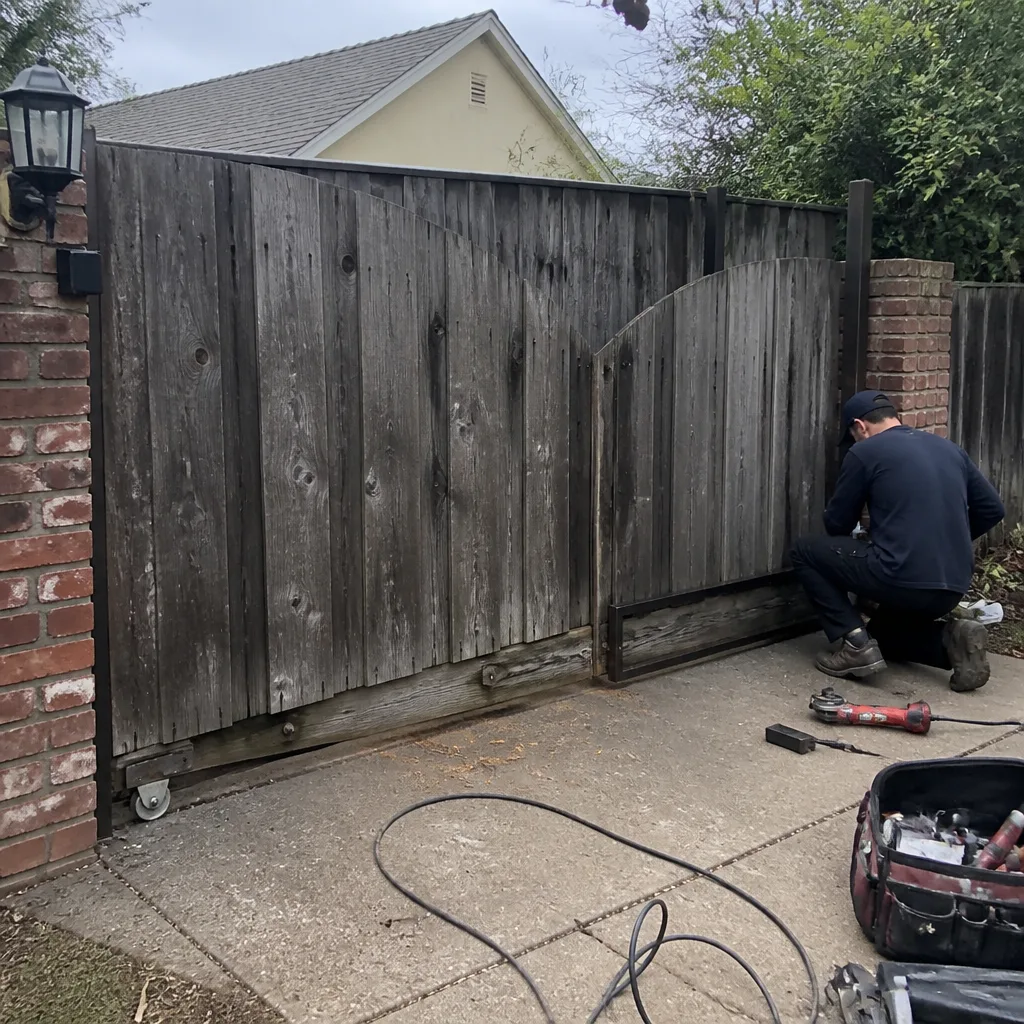 Before
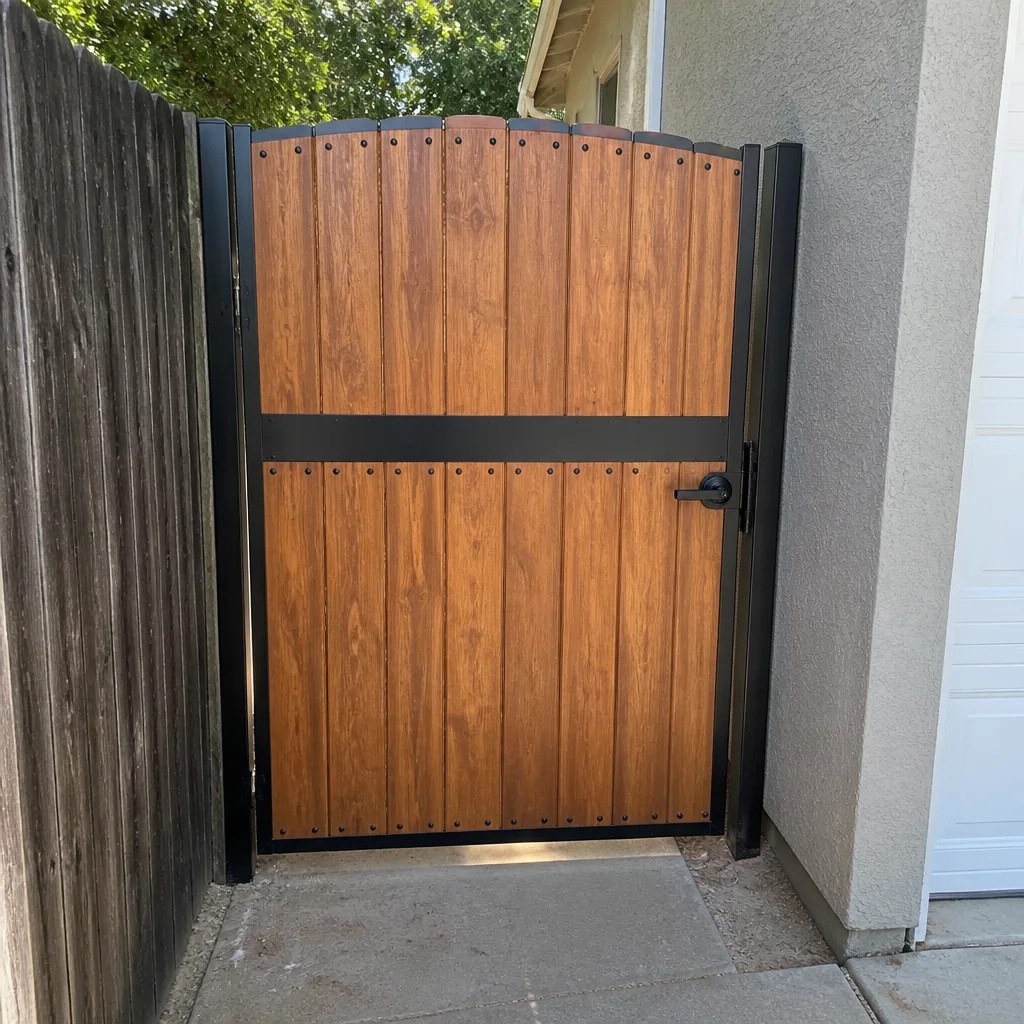 After
After Before
 After
After Before
 After
After