
Last updated October 17, 2026
 Wrought iron
 Wood & steel frame
 Farm & ranch
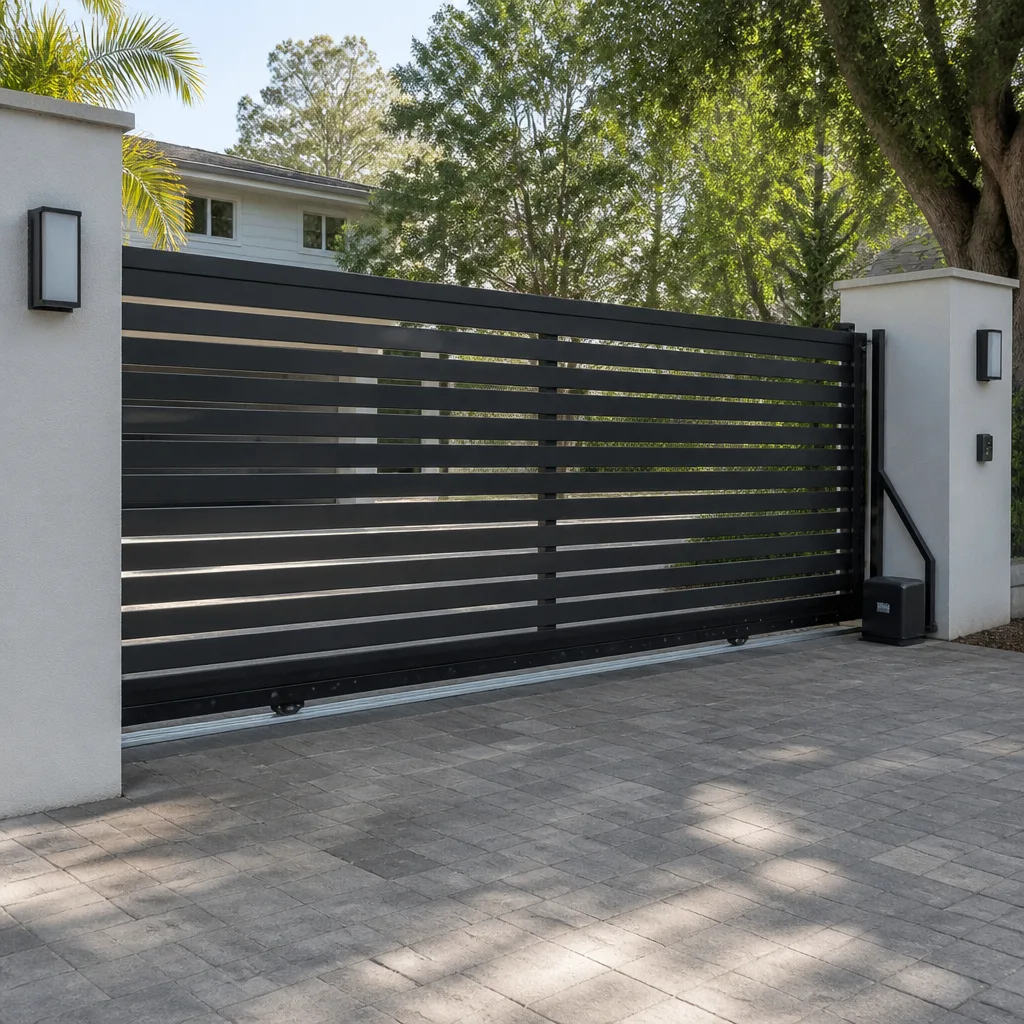 Sliding driveway gates
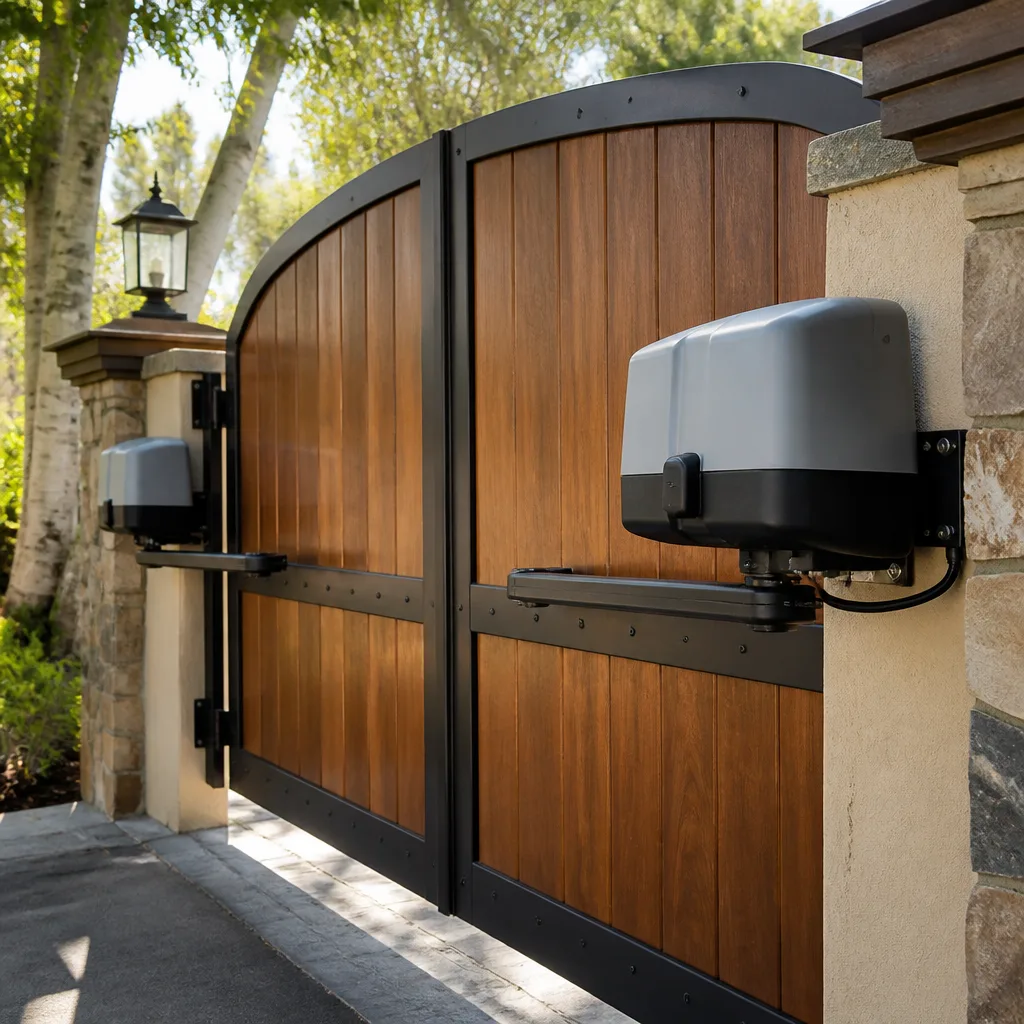 LiftMaster operators
Free on-site gate assessment - hinges, posts, and your LiftMaster or Nice gate operator checked before anything is quoted
The assessment is free and the quote is the invoice.
Get your free estimateGate Repair Permits, Codes & Inspections in CA: What You Need to Know
Sacramento County’s building division issued 14 stop-work orders on gate and fence projects in the first half of 2024. In 11 of those cases, the homeowner had been told by their contractor that “gates don’t need permits.” That phrase alone cost Sacramento families thousands in re-inspection fees, delayed closings, and corrective work. This guide draws the exact line between a simple hinge swap and a gate alteration that triggers California permit requirements, walks you through Title 24 pool barrier code, and explains what an inspector actually looks at when the county signs off.
Quick Answer
Like-for-like gate repair in Sacramento (replacing a hinge, a latch, or a rotted picket with the same size and material) does not require a permit. A permit becomes necessary when you move a post, pour a new footing, widen the gate opening by more than 10%, or add an electric operator to a previously manual gate. Pool enclosure gates face additional Title 24 requirements, including self-closing and self-latching hardware, regardless of whether a permit was pulled.
Styles & brands we work with
Table of Contents
- Repair vs. Alteration: Where the Permit Line Actually Sits
- California’s Pool Barrier Gate Code (Title 24, Part 2, Section 11B)
- Electric Gate Operators and When They Trigger a Permit
- What Happens When an Unpermitted Electric Gate Shows Up at a Home Sale
- The Sacramento County Permit Application Process, Step by Step
- Who Pulls the Permit: Homeowner or Contractor?
- What a Sacramento Inspector Looks For at Final
- Common Mistakes to Avoid
Repair vs. Alteration: Where the Permit Line Actually Sits
The California Building Code does not require a permit for what it calls “ordinary repairs.” That phrase has a specific legal meaning, and it is narrower than most Sacramento homeowners assume. Ordinary repair means restoring something to its original condition without changing its size, location, material, or function. A sagging gate with a bent hinge gets a new hinge. A latch that no longer catches gets a replacement latch. A rotted cedar picket is swapped for a new picket of the same dimensions. All of that is permit-exempt.
The line moves the moment the work changes the structure, the opening, or how the gate operates. Here is where Sacramento County draws it in practice:
- Permit-exempt repairs: Hinge replacement, latch or lock replacement, in-kind board or picket replacement, gate wheel replacement, gate stop replacement, tightening or re-welding existing hardware in place.
- Permit-triggering alterations: Moving a gate post to a new location, pouring a new concrete footing for a post, changing the gate opening width by more than 10%, replacing a wood gate with a steel frame that changes post load, or adding any powered operator to a gate that was previously manual.
There is a persistent myth in Sacramento that “you only need a permit for the fence, not the gate.” We hear it at least twice a month from homeowners in East Sacramento and Land Park who were told exactly that. The county treats a gate as part of the fence system under Chapter 15.08 of the Sacramento County Code. When the gate’s structural supports change, the permit requirement follows the same logic as any fence alteration that exceeds repair scope.
One nuance homeowners miss: a gate replacement that keeps the same opening width and the same posts in place is still a repair, even if the gate itself is brand new. The county cares about what you are doing to the structure, not how old the gate was. A new wood gate hung on existing posts with existing hinge locations does not require a permit. A new gate that needs new posts set six inches further apart does.
California’s Pool Barrier Gate Code (Title 24, Part 2, Section 11B)
Any Sacramento homeowner whose gate is part of a pool enclosure answers to a stricter code than the rest of the yard, and this is where we see the most expensive mistakes. California’s Title 24, Part 2, Section 11B sets specific requirements for pool barrier gates that apply whether or not you ever pull a permit. If your gate is part of the barrier that encloses a swimming pool or spa, it must comply with this section, full stop.
The core requirements under Section 11B are not suggestions. They are prescriptive:
- Self-closing: The gate must return to the closed position from any angle of opening without assistance. No exceptions for older homes, no grandfathering.
- Self-latching: The latch must engage automatically when the gate closes. A latch you have to lift or push manually does not comply.
- Release mechanism height: The latch release must be located at least 54 inches above grade on the pool side, or require a tool or key to open from the outside.
- Opening direction: The gate must swing away from the pool, not toward it.
- Clear opening limitations: The gap between the bottom of the gate and the ground cannot exceed 2 inches.
Here is the part most homeowners do not realize: a pool barrier gate that does not comply is a code violation even if no one ever filed a permit application. The requirement attaches to the property condition, not to the construction activity. If you buy a Sacramento home with a pool and the gate does not self-close, that is now your violation to cure. Home inspectors flag it on nearly every pre-1980 pool home we see in Arden-Arcade and Carmichael.
What does compliance cost? A standard spring-loaded self-closing hinge runs between $25 and $60 in Sacramento hardware stores. A code-compliant gravity latch or magnetic latch runs $40 to $90. Professional installation of both on an existing wood gate typically lands between $180 and $320 including parts, depending on whether the gate frame needs reinforcement to handle the spring tension. That is a small number compared to the cost of re-inspection fees or a failed sales inspection.
We work on pool gates throughout Sacramento, including homes in the Pocket and Greenhaven where original 1970s gates have never been updated. When we replace pool gate hardware, we use spring-loaded hinges and self-latching hardware as standard practice, and we check the gate’s swing direction before quoting any repair. A gate that swings toward the pool cannot be made compliant just by changing the latch. It needs to be re-hung, which usually means replacing the posts and re-setting the hinge mounting points.
Electric Gate Operators and When They Trigger a Permit
Adding an electric operator to a manual gate is the single most common unpermitted gate project in Sacramento, and the one most likely to surface down the road. The California Electrical Code requires a permit for any new circuit that powers a gate operator, and Sacramento County enforces this through its electrical inspection process. When we install or repair operators from LiftMaster, FAAC, or Mighty Mule, the defining question is whether the power run already exists.
If your gate already has a working operator and you are replacing it with a like-for-like unit, no permit is required. A LiftMaster LA400 swapped for a newer LiftMaster model on existing conduit and existing wiring is ordinary repair. The circuit was inspected when it was originally installed, and you are not changing its load characteristics in any way the county cares about.
If the gate has never been powered and you are now running conduit, pulling wire, adding a transformer, or installing a new breaker, that is a new electrical installation. It requires an electrical permit. Sacramento County’s over-the-counter electrical permits for equipment like gate operators generally run from $100 to $250 in filing fees, and the inspection adds one site visit to your timeline.
The safety side of this matters more than the permit itself. UL 325 governs automatic gate operator safety, and it requires two independent entrapment protection devices on any automatically operated gate. That means contact sensors, photoelectric eyes, or inherent obstruction detection on the operator, plus a separate secondary device. A gate operator with only one of those is not code-compliant, and it is also dangerous for kids and pets. We will not install one that way, and neither should any contractor you hire in Sacramento.
Homeowners who install operators themselves often skip the ground bond and the dedicated circuit requirement. A gate operator on a shared circuit with a garage door opener or outdoor lighting is not code-compliant, and it is the exact type of item a sharp home inspector will flag during escrow.
What Happens When an Unpermitted Electric Gate Shows Up at a Home Sale
The typical discovery happens quietly, usually during the buyer’s inspection period. An inspector testing the gate operator notices the conduit run looks recent, checks county records, and finds no electrical permit for the circuit. At that point you are no longer dealing with a repair question. You are dealing with a disclosure question and a timeline problem.
Sacramento home sale contracts give buyers an inspection contingency window, commonly 10 to 17 days. A flagged unpermitted gate operator has to be sorted out inside that window or the closing slips. The seller’s options are not great:
- Pull the permit retroactively: This means hiring a licensed electrician or gate contractor, bringing the installation up to current code, and scheduling an inspection. Sacramento County’s re-inspection fees for unpermitted work typically run between $300 and $900 depending on the scope and how many corrections are needed. The process takes 2 to 4 weeks, which usually pushes closing.
- Offer a credit: Some sellers offer the buyer a credit to cover the cost of remediation after closing. This avoids delay but shifts the risk to the buyer, and lenders sometimes balk at unpermitted electrical work on the appraisal.
- Remove the operator: The seller removes the electric operator, restores the gate to manual operation, and the buyer takes the issue on later. This is the fastest fix but rarely what anyone actually wants.
The financial exposure goes beyond inspection fees. If the unpermitted operator is found to be non-compliant with UL 325, the remediation may include new photoelectric sensors, a ground bond correction, or a new conduit run. A $600 operator installation can become a $2,500 correction once it is on the record. We have seen this exact sequence play out in Natomas and Elk Grove, usually three or four days before a scheduled closing.
The Sacramento County Permit Application Process, Step by Step
When a gate project does require a permit, the process in Sacramento County is not the bureaucratic maze people fear. For straightforward fence and gate work, the county processes permits over the counter at the Building Assistance Center on the 7th floor of 827 7th Street in downtown Sacramento. You do not need an appointment for most simple applications.
Here is the step-by-step sequence for a typical Sacramento County gate permit:
- Determine the permit type. A gate alteration that moves posts or changes opening width needs a building permit under the county’s fence and retaining wall provisions. An electric operator on a new circuit needs an electrical permit, often issued as a combined building-electrical permit for small projects. The counter staff at 827 7th Street can confirm the application type in about five minutes.
- Complete the application. The county uses a standard application form available at the counter or online through the Accela Citizen Access portal. You will need the property address, the parcel number from your tax bill, a brief description of the work, and the estimated valuation of the project.
- Provide a site sketch. For gate work, the county generally wants a simple plot plan showing the gate location, the distance from the gate to the property line, and the gate’s swing direction. A hand-drawn sketch on graph paper is accepted for simple residential projects. If the gate is part of a pool barrier, note that on the sketch. It changes the review path toward Title 24 compliance.
- Pay the filing fee. Most residential fence and gate permits in Sacramento County fall into a flat-fee category. As of this writing, simple fence and gate permits over the counter typically run between $150 and $400 in total fees including the issuance fee and the first inspection. Electrical permits for gate operators run $100 to $250 plus any plan check fees if the installation is non-standard.
- Receive the permit. For over-the-counter permits, issuance is typically same-day if the application is complete. The county’s published turnaround for simple fence and gate permits is 10 to 15 business days when any plan review is required, but most simple gate projects clear the counter in one visit.
- Schedule and pass inspection. After the work is complete, you call the county’s inspection request line or use the portal to schedule a final inspection. Sacramento County generally offers inspection windows within 48 to 72 hours of the request. The inspector verifies the work matches the permit scope and meets code.
One practical note for Sacramento homeowners in older neighborhoods like Tahoe Park and Curtis Park: if your home predates the county’s current digitized records, you may discover that no permit history exists for the original fence or gate at all. That is common and not a problem in itself. The permit you pull covers the new work, not the entire history of the fence line.
Who Pulls the Permit: Homeowner or Contractor?
For any gate project that requires a permit, a licensed contractor pulling that permit on your behalf is standard, legally routine practice in California. It is not a special favor, and it is not an upsell. The contractor’s license number goes on the permit application, the contractor’s insurance covers the work, and the contractor schedules the inspection. That is the normal way this works.
So when a contractor tells you “you’ll need to pull the permit yourself,” that is a line worth pausing on. There are exactly two legitimate reasons a contractor might say this. The first is that the contractor is doing the work but you, the homeowner, are acting as the owner-builder and taking on the legal responsibility for code compliance. The second is that the contractor is doing unlicensed or off-permit work and does not want their license number on a county application. In our experience in Sacramento, the second reason is far more common.
Here is what owner-builder status actually means in California: you sign a verification that you are performing the work yourself, or directly supervising your own employees. You cannot legally act as an owner-builder while a contractor performs the work, unless that contractor is your direct employee. Any contractor suggesting you pull the permit yourself so they can do the work is asking you to make a false statement on a government form. That is a red flag in Sacramento County, and it is exactly the situation that led to several of those 2024 stop-work orders.
At Latch and Post Gate Repair Sacramento home, we pull permits for gate installations and electric operator work when the scope requires one. The permit fee is a line item on the written quote, visible before any work starts. You will see the exact number in writing before we touch anything, and we do not start work until you have approved that number.
What a Sacramento Inspector Looks For at Final
When a Sacramento County inspector arrives for a final inspection on gate work, they are working from a checklist that is shorter than most homeowners expect but specific on a few points where we regularly see failures. Understanding what they check is useful whether you are pulling a permit or simply want your gate to be code-adjacent even without one.
For a structural gate alter, the inspector verifies:
- Footing depth and diameter. Sacramento County requires gate post footings to extend to a depth of at least 18 inches, but posts supporting a heavy gate or an electric operator often need deeper footings – typically 24 to 30 inches. The inspector confirms the post is set in concrete and that the footing dimensions match what was described on the permit.
- Gate swing clearance. The gate must swing freely through its entire arc without striking walks, driveways, or adjacent structures. If the gate opens over a public sidewalk, the inspector checks that the gate does not obstruct pedestrian right-of-way.
- Hardware rating. Hinges and latches must be rated for the gate’s weight and use class. A residential driveway gate with an operator requires hardware rated for the operator’s pull force.
For electrical gate operator work, the inspector’s checklist includes:
- Dedicated circuit and disconnect. The gate operator must be on its own circuit with an accessible disconnecting means. A shared breaker with garage receptacles fails.
- UL 325 entrapment protection. Two independent forms of entrapment protection, verified by the inspector at the site.
- Grounding and bonding. Metallic gate frames and the operator chassis must be bonded to the equipment grounding conductor.
- Conduit and wire type. Outdoor conduit runs must be rated for wet locations, and direct-burial cable must meet the correct depth requirements.
If the gate is part of a pool enclosure, the inspector adds the Title 24 checks: self-closing from any open position, self-latching on closure, release height of at least 54 inches on the pool side, and the gate swinging away from the pool. This is where we see the most Sacramento re-inspections. A gate that passes every structural check but does not self-close fails the pool barrier review, and you pay the re-inspection fee to have the same inspector return.
Common Mistakes to Avoid
- Believing “gates don’t need permits” without asking which kind of gate work. A hinge swap and a post relocation are different projects with different rules. The contractor who says “gates never need permits” in Sacramento is the contractor who gets a stop-work order later.
- Hiring a contractor who tells you to pull the permit yourself. In Sacramento County, a licensed contractor pulling the permit is standard. A contractor who pushes the permit onto you is either unlicensed, working off-permit, or asking you to make a false owner-builder statement. None of those end well.
- Replacing a pool gate latch with a hardware-store gravity latch. A gravity latch does not self-latch positively, and it fails Title 24. Pool gates need magnetic or spring-loaded self-latching hardware, not the cheapest latch on the shelf at the big-box store.
- Adding an electric operator without installing two forms of entrapment protection. UL 325 requires two independent means of entrapment protection. One photoelectric eye is not enough, and an operator with only inherent obstruction detection requires a secondary device.
- Widening a gate opening by “just a few inches” without checking the 10% threshold. Moving a post six inches on a four-foot gate is within the opening width change threshold that triggers a permit in Sacramento County. Six inches on a twelve-foot driveway gate crosses it.
- Assuming the inspector only checks the new work. A pool gate that has been non-compliant for twenty years will still fail inspection if the inspector’s scope includes the pool barrier. The permit process can force compliance with code sections you were not planning to address.
- Skipping the permit on an electric gate and hoping the sale inspector misses it. Home inspectors in Sacramento are trained to look for recent conduit runs and undocumented circuits. The $300 to $900 re-inspection cost is cheaper than the escrow delay, and the disclosure obligations do not go away just because the inspector missed it.
See the difference
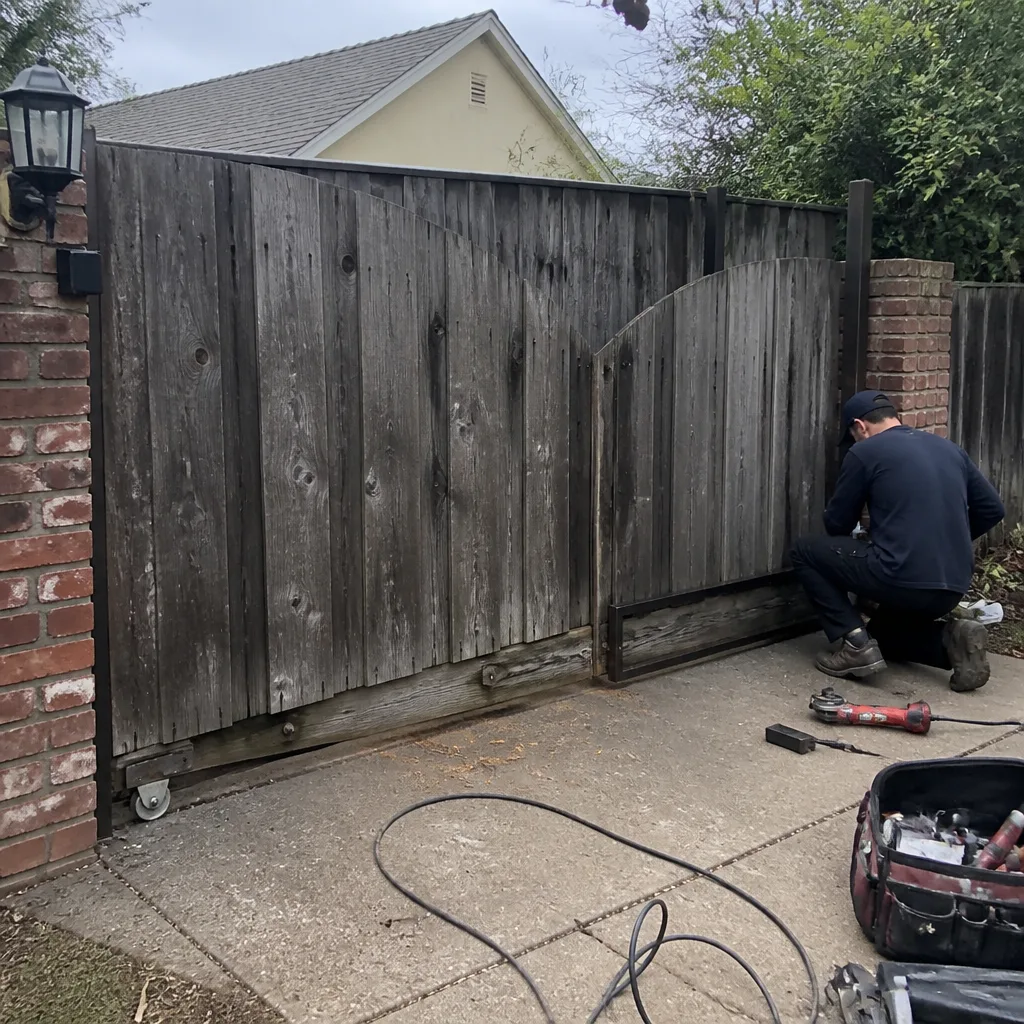 Before
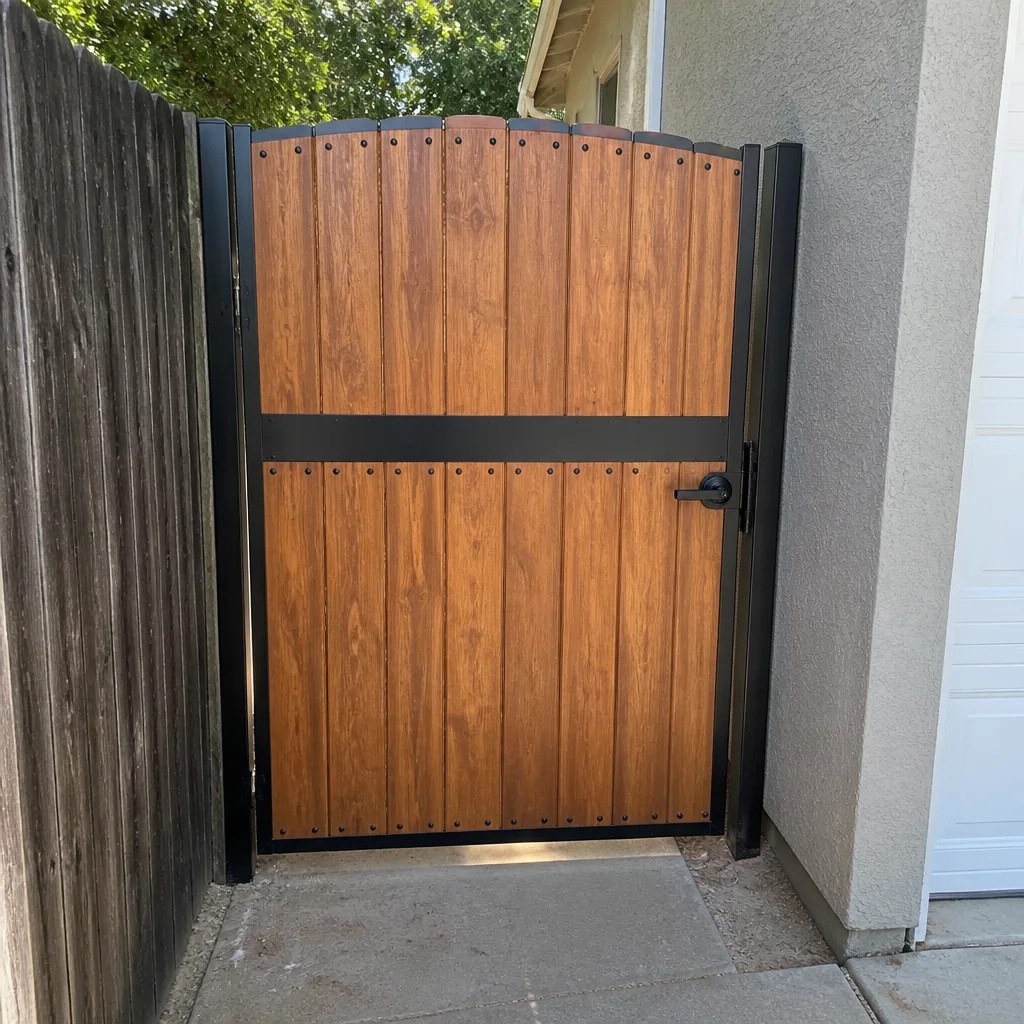 After
After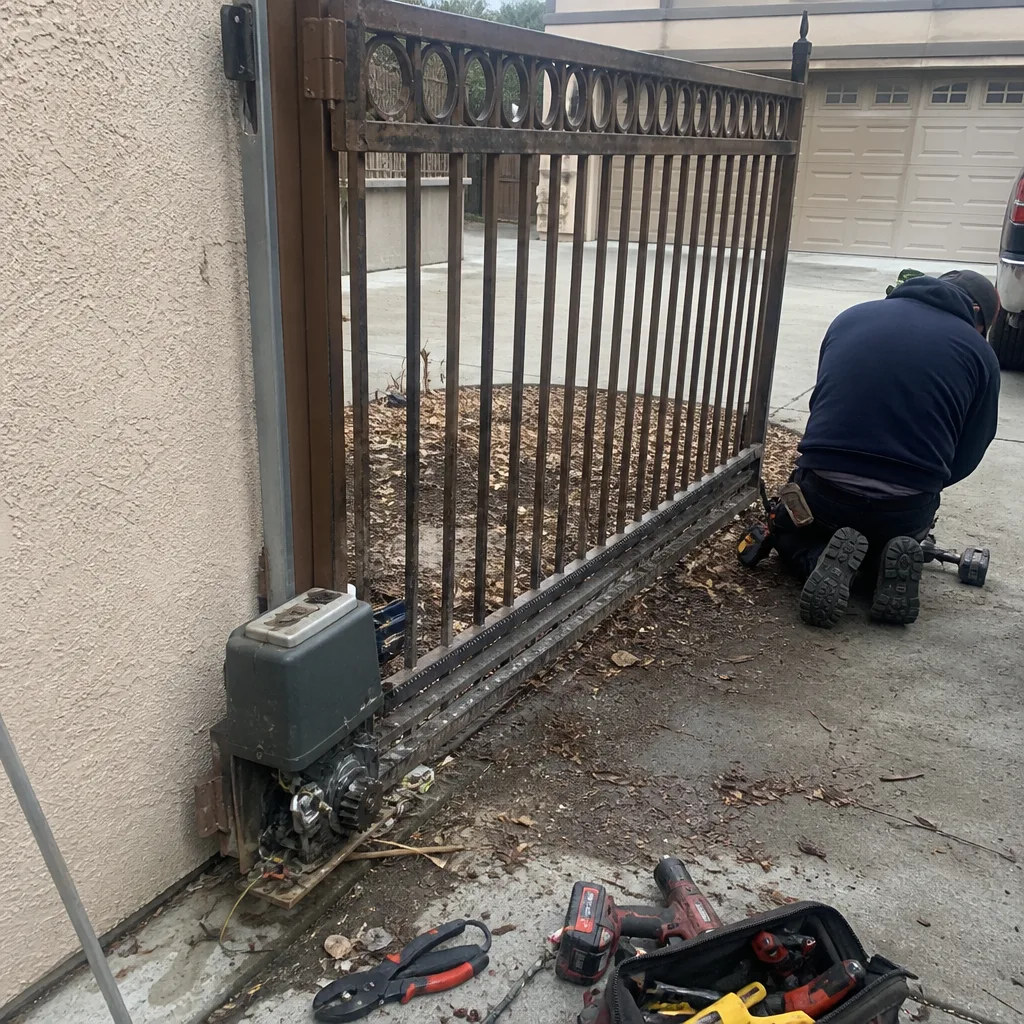 Before
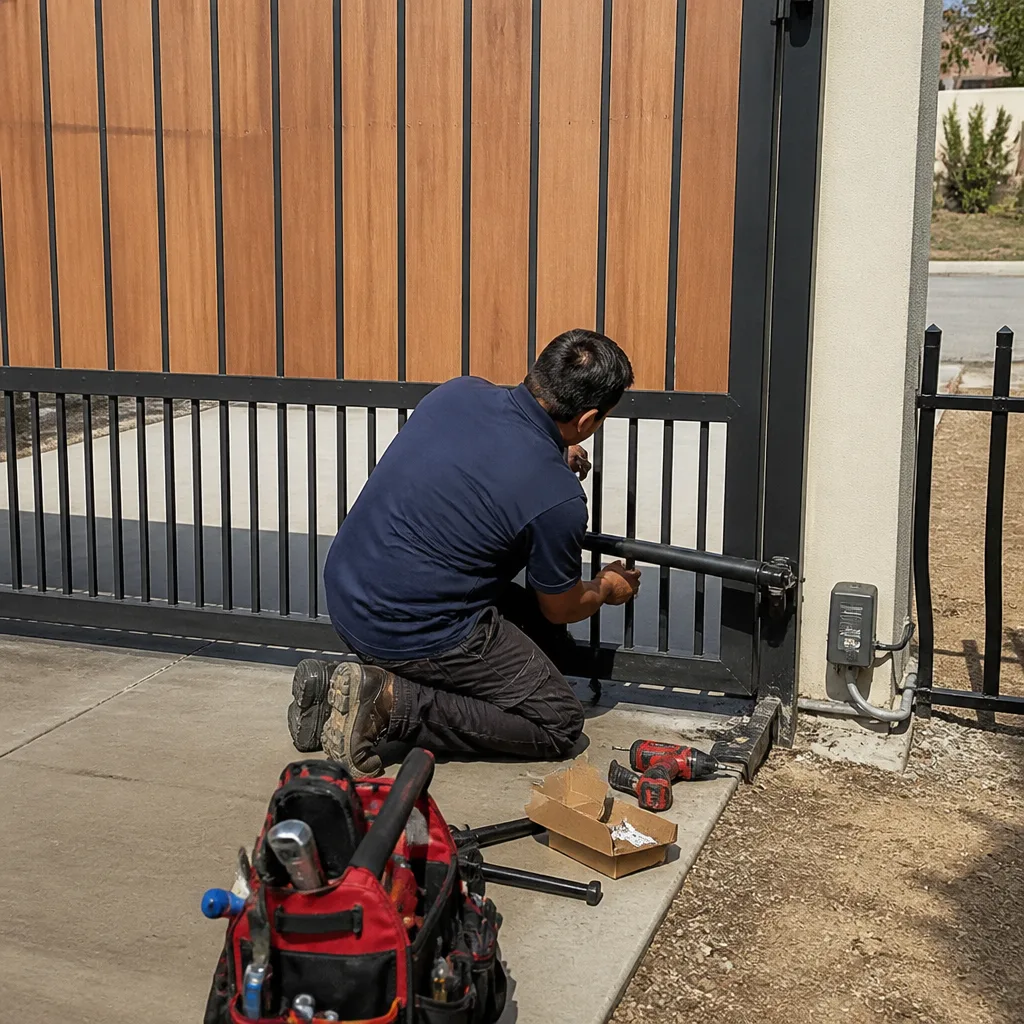 After
After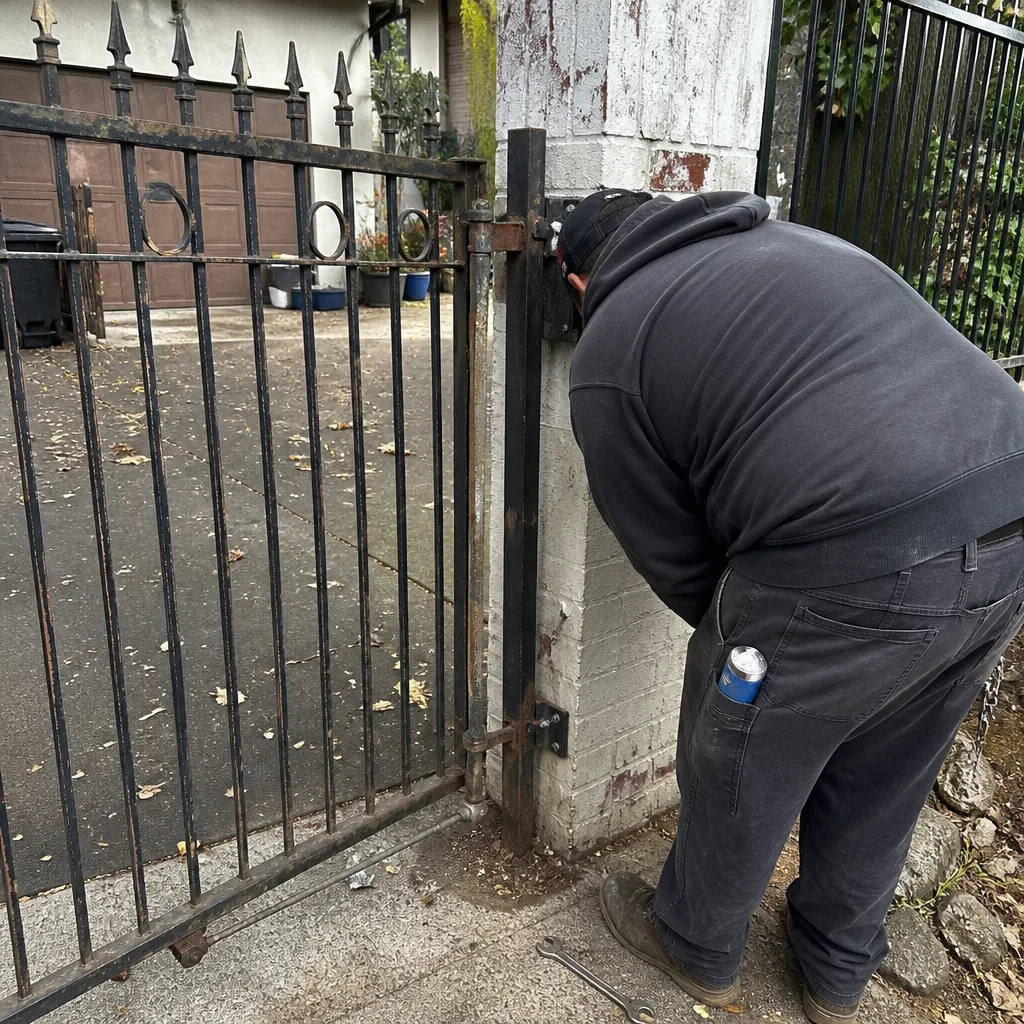 Before
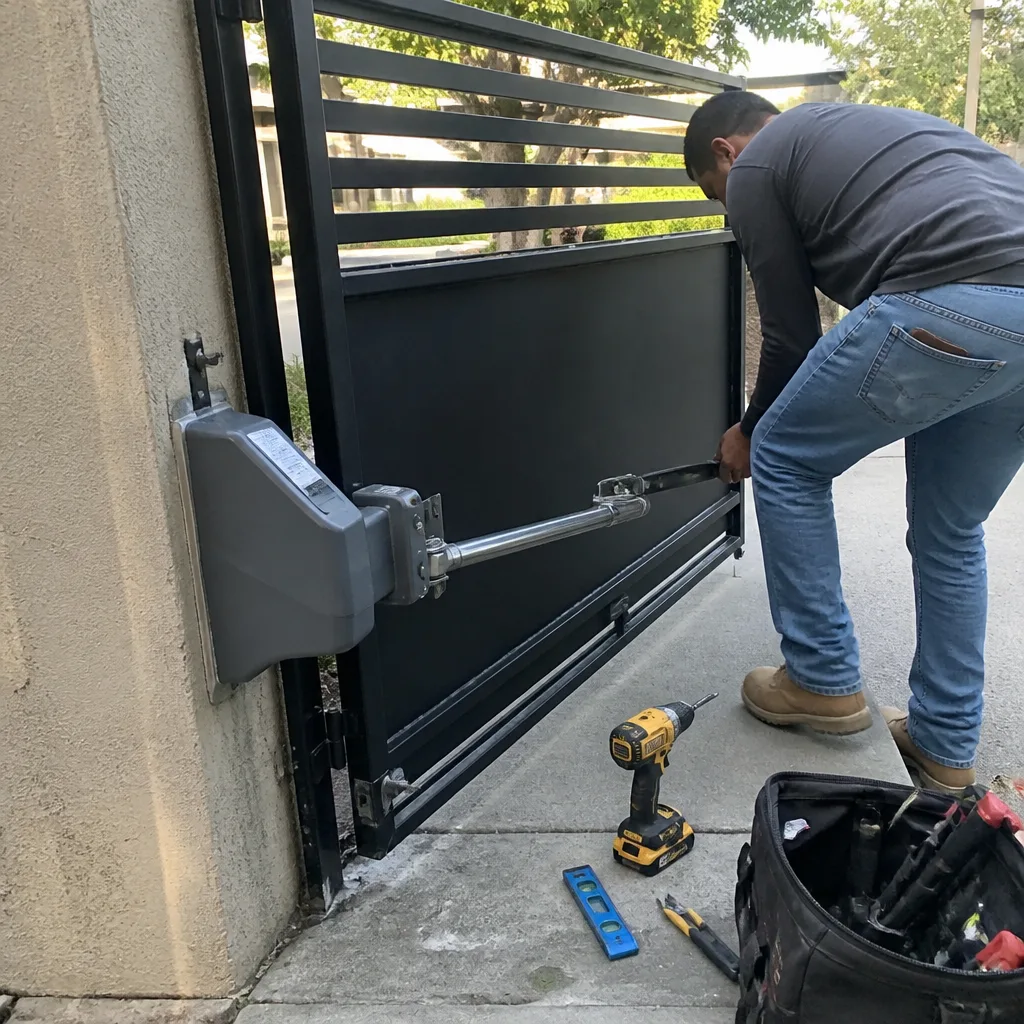 After
AfterWhen to Call a Professional
Call a professional when the work touches structure, electricity, or pool safety. If you are moving posts, pouring footings, or hanging a gate on new hardware that changes the load path, you want someone who understands Sacramento County’s permit process and what inspectors look for. If you are adding an electric operator to a manual gate, you want someone who handles UL 325 compliance and the electrical permit as standard practice, not as an afterthought. If your pool gate does not self-close or self-latch, that is a code violation on your property right now, and a professional can bring it into compliance for between $180 and $320 in most Sacramento cases. Gate Repair in Sacramento is what we do every day, and Electric Gate Repair in Sacramento is where the permit questions come up most often. Latch and Post Gate Repair Sacramento offers free estimates in Sacramento, and we lay drop cloths on the floor and put on shoe covers before we step inside. Call (279) 266-8501 with the details of your gate project, and we will give you a written price.
Frequently Asked Questions
No. Replacing a hinge, latch, lock, wheel, or stop on an existing gate is an ordinary repair under California building code and does not require a permit in Sacramento County. The work must be like-for-like in size and function, and the gate’s structure must remain unchanged.
Sacramento County re-inspection fees for unpermitted gate operator work typically run between $300 and $900, not including any corrective work needed to bring the installation up to UL 325 and electrical code. The full remediation, including new entrapment protection or a ground bond correction, can push the total to $1,500 to $2,500. Call (279) 266-8501 for a written quote on your specific gate, and you will see the exact number before any work starts.
California Title 24, Part 2, Section 11B requires every pool barrier gate to be self-closing from any open position and self-latching upon closure, with the latch release at least 54 inches above grade on the pool side. The gate must also swing away from the pool and have no more than a 2-inch gap beneath it.
Simple fence and gate permits in Sacramento County are issued over the counter, often same-day, at the Building Assistance Center at 827 7th Street. When any plan review is required, the county’s published turnaround is 10 to 15 business days. Final inspections are typically scheduled within 48 to 72 hours of the request.
If the gate has never been powered, running a new circuit to it requires an electrical permit in Sacramento County, even if you do the work yourself as an owner-builder. If a circuit already exists and you are replacing a like-for-like operator, no permit is required. Any operator installation must meet UL 325’s two-device entrapment protection requirement, regardless of permit status.
Yes. For Gate Installation in Sacramento and electric operator work that requires a permit, we pull the permit in our name, line-item the fee on the written quote, and schedule the inspections. The permit fee is always visible in writing before we start, and we never ask a homeowner to pull a permit for work we are performing. Call (279) 266-8501 for a free estimate.
The Bottom Line
Sacramento gate permits come down to one question: are you repairing what already exists, or changing it? Like-for-like hardware swaps are permit-exempt, and you can do them tomorrow without calling the county. The moment you move a post, widen an opening beyond 10%, or bring electricity to a gate that never had it, the rules change and the homeowner carries the violation if the work is unpermitted. Pool gates add another layer: Title 24 compliance attaches to your property whether or not anyone ever filed paperwork. The permit process in Sacramento County is faster and cheaper than most homeowners expect, and it is almost always cheaper than the alternative. Browse more guides & resources for Sacramento homeowners.
Written by Cody Beckman, Owner at Latch and Post Gate Repair Sacramento, serving Sacramento since 2009.