
Last updated October 17, 2026
 Wrought iron
 Wood & steel frame
 Farm & ranch
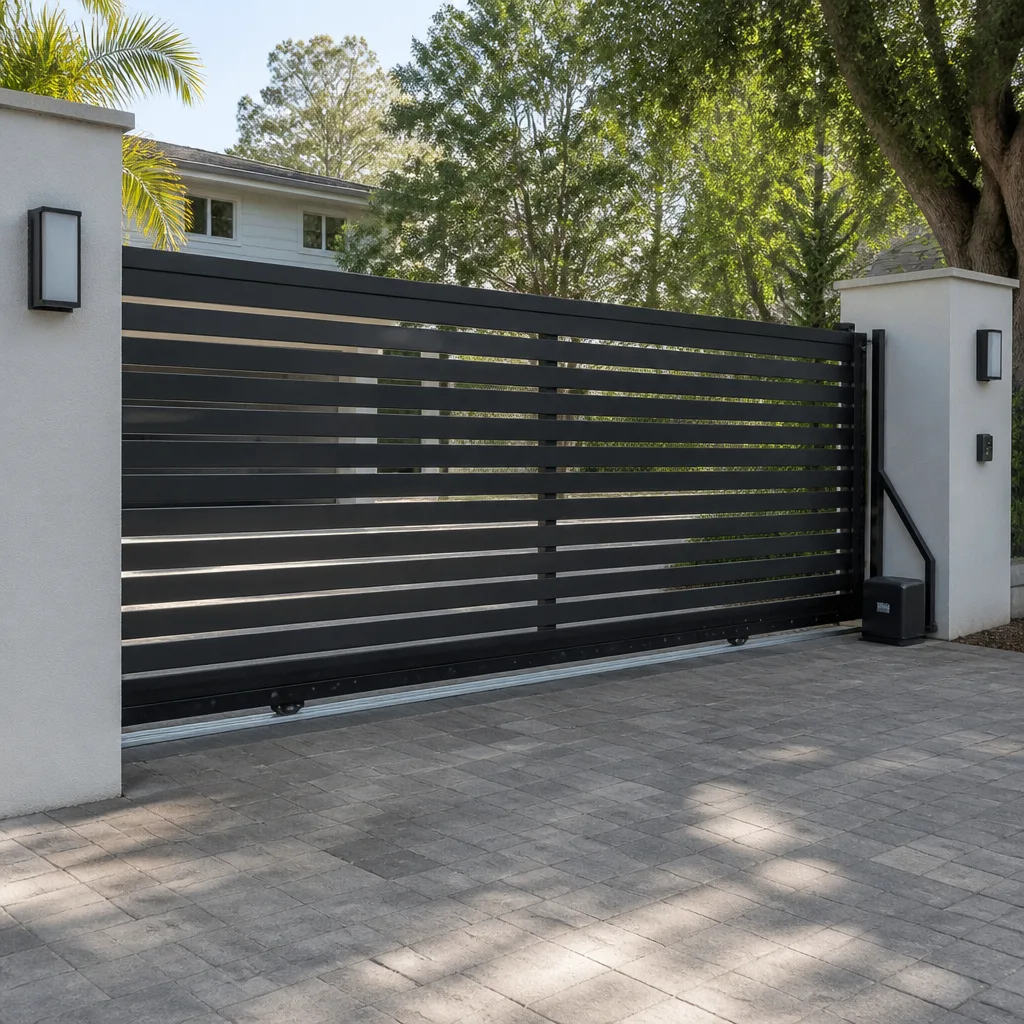 Sliding driveway gates
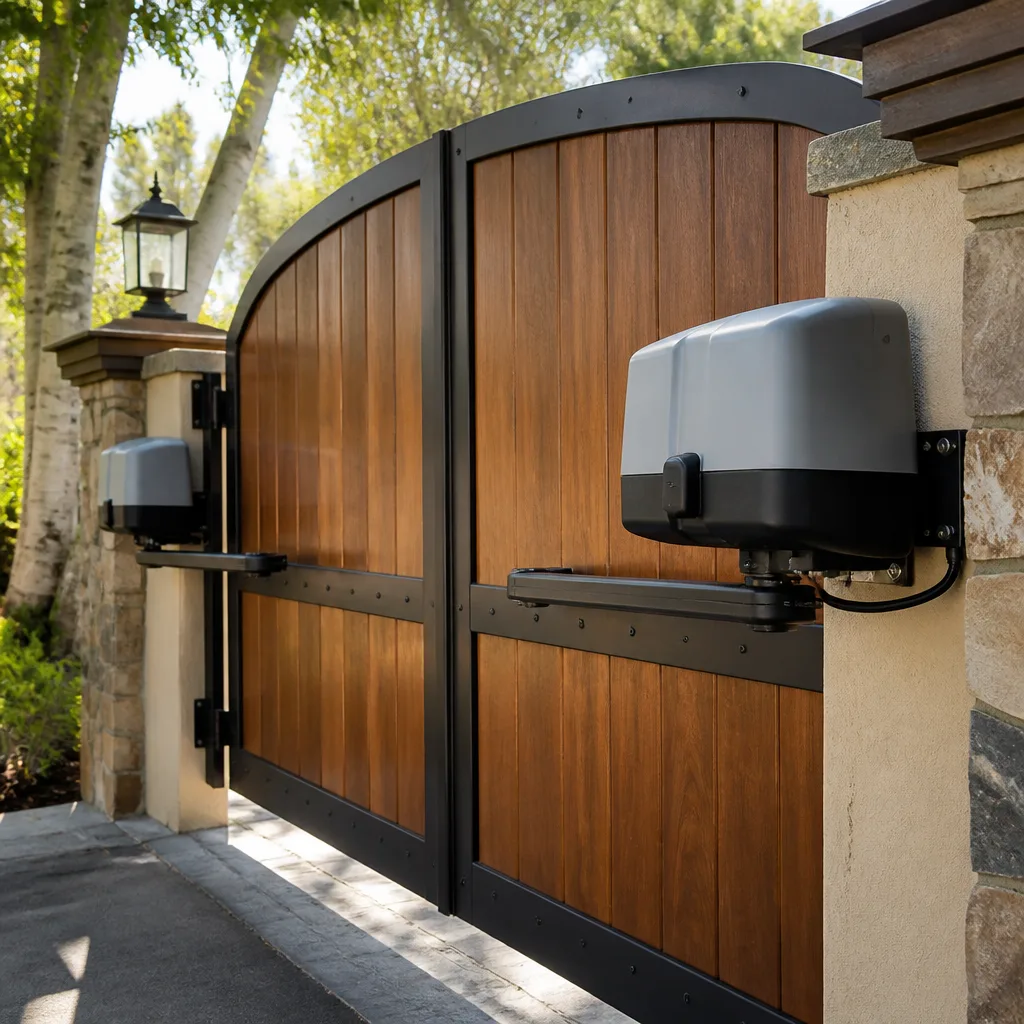 LiftMaster operators
Free on-site gate assessment - hinges, posts, and your LiftMaster or Nice gate operator checked before anything is quoted
The assessment is free and the quote is the invoice.
Get your free estimateGate Repair Maintenance Checklist for Sacramento Homeowners
A gate that closes perfectly in February can drag three-eighths of an inch against the strike plate by August, not because anything broke, but because aluminum expands roughly one-sixteenth of an inch per ten feet for every 100°F of temperature rise, and Sacramento regularly swings 90°F between seasons. Most maintenance checklists ignore this entirely. They tell you to spray some lubricant and tighten a few bolts, as if a gate in Phoenix and a gate in Portland lived the same life. This guide is different. It is built specifically for Sacramento’s four real seasons: wet season, heat ramp, peak heat, and cool-down, and it tells you exactly what to check, what to use, and what to leave alone. By the end, you will have a repeatable routine that keeps your gate working through every temperature swing the valley throws at it.
Styles & brands we work with
Quick Answer
A Sacramento gate maintenance checklist should be organized around four local seasons rather than calendar months: wet season (November through March), heat ramp (April through June), peak heat (July through September), and cool-down (October). Each season has specific inspection points for hinges, latch alignment, post stability, electric operator function, and child/pet safety gaps. Run the full checklist twice a year at minimum, photograph the gate during each inspection for your records, and avoid two specific mistakes that void most manufacturer warranties: re-torquing lag bolts into a cracked post and lubricating an electric operator’s internal gear with the wrong grease.
Table of Contents
- Why Sacramento Needs a Different Maintenance Calendar
- The Five-Minute Visual Inspection You Can Photograph
- Wet Season Checklist: November Through March
- Heat Ramp Checklist: April Through June
- Peak Heat Checklist: July Through September
- Cool-Down Checklist: October
- The Truth About Lubrication in Sacramento’s Dust
- Pet and Child Safety Inspection Sub-List
- Two Maintenance Tasks That Void Manufacturer Warranties
- Common Mistakes to Avoid
- When to Call a Professional
- Frequently Asked Questions
- The Bottom Line
Why Sacramento Needs a Different Maintenance Calendar
Sacramento does not have four seasons the way the rest of the country thinks of them. We have a long, cool wet period that soaks wood posts and swells fibers, followed by a punishing stretch of 95°F-plus days that bake aluminum, powder coat, and plastic components dry. A gate that sits in full sun on a south-facing lawn in Land Park experiences a surface temperature that can exceed 150°F in July, while the same gate in January might sit at 45°F for weeks. That 100°F difference is why your latch alignment changes without anyone touching it.
In our experience repairing gates across Sacramento, from East Sacramento to Elk Grove, the same failure patterns repeat every year. Hinges that were adjusted in March bind by August because the aluminum frame expanded. Wood gates that swung freely in October drag against the ground in February because the pickets absorbed moisture and swelled. The maintenance schedule that works for a gate in a mild coastal climate does not apply here. Sacramento homeowners need a schedule that anticipates expansion, contraction, moisture, and dust, in that order.
Here is the calendar we recommend to every customer who asks us how to make a gate last:
- Wet season (November – March): Inspect for wood swelling, post lean, and rust forming at hinge points. Check drainage around the post base.
- Heat ramp (April – June): Re-check latch alignment as temperatures climb. Lubricate hinges before dust season settles in. Test auto-close mechanisms.
- Peak heat (July – September): Check for aluminum expansion binding. Inspect electric operator limits and photo eyes. Verify safety loops and edges still function.
- Cool-down (October): Do a full pre-rain inspection. Seal any exposed wood, verify post caps are intact, and document condition before the wet season arrives.
This is not a generic spring and fall routine. It follows the actual physics of how a gate in Sacramento responds to its environment. For a deeper look at what a full professional inspection covers, see our guide to Gate Repair in Sacramento.
The Five-Minute Visual Inspection You Can Photograph
Before you start adjusting anything, establish a baseline. Take five minutes, walk around your gate, and document what you see. Use your phone camera. Date-stamp the photos or save them in a folder by season. This record does two things: it shows you when a problem started, and it gives you evidence if you need to file a warranty claim or show a technician what changed.
Here is the five-minute routine we recommend, in order:
- Open and close the gate by hand. Feel for resistance, hear for squeaks or grinding. Note any point where the gate scrapes or catches.
- Photograph the hinge side. Get close enough to see the hinge pins, the mounting plates, and any visible rust.
- Photograph the latch side. Show the gap between the gate and the strike plate. A gap that is not uniform from top to bottom tells you the gate has shifted.
- Photograph the bottom gap. Stand back and shoot the space between the gate bottom and the ground or threshold. Note any change from last season.
- Photograph the post bases. Look for cracks, leaning, or soil that has pulled away from the concrete footing.
- If you have an electric gate: Photograph the operator arm, the photo eyes, and any safety edge sensors. Note any exposed wiring.
- Test the auto-close function if your gate has one. Count how long it waits before closing. Write it down.
This takes five minutes. Do it at the start of each season, and you will catch most problems before they become repair calls. We started recommending this because Sacramento’s dry summers and wet winters create slow, seasonal drift that is easy to miss when you see the gate every day. A photo record makes the drift visible.
Wet Season Checklist: November Through March
Sacramento gets an average of about 18 to 20 inches of rain per year, and almost all of it falls between November and March. That means your gate sits damp, or at least humid, for roughly five months. Wood absorbs moisture and swells. Steel hardware rusts. Soil around post footings softens, and posts that were set shallow can begin to lean. This is the season to focus on water.
What to Check During the Wet Season
- Wood gate swelling: Stand at the latch end. If the gate drags on the ground or scrapes the post, the wood has expanded. Measure the bottom gap with a tape measure. Anything under half an inch means you may need to trim or re-hang before spring.
- Post lean: Toss a level against each post, front and back. A post that is out of plumb by more than one-eighth of an inch per foot of height is shifting. Sacramento clay soil expands when wet, which can push posts out of alignment.
- Rust at hinge points: Sacramento’s wet season is not coastal, but it is damp enough to start surface rust on unprotected steel. Look for orange staining around hinge pins and mounting screws.
- Drainage at the post base: Water pooling around a post accelerates both wood rot and steel corrosion. If you see standing water after a rain, regrade the soil or add a small French drain line away from the post.
- Electric components: If you have an electric gate, check that the control box cover is sealed and no water is collecting inside. Sacramento’s winter storms come with driving rain that can find its way into cracked enclosures.
One thing we see often in Sacramento during wet months: gate hinges that were fine in October start binding in December, not because the hinge failed, but because the wood post swelled and pushed the gate out of square. The fix is usually not a new hinge. It is adjusting the hinge spacing to account for the swollen wood. If you are not sure what you are looking at, a full inspection from Gate Installation in Sacramento includes hinge and post evaluation, and we can tell you whether the post itself is the problem.
Heat Ramp Checklist: April Through June
By late April, Sacramento starts its climb toward triple digits. This is the season when aluminum gates begin their slow expansion, and hardware that was tightened in January starts to feel loose or stiff. The heat ramp is the best time to do your mechanical maintenance, because the conditions are mild enough to work in but warm enough to reveal where expansion will cause trouble in July.
What to Do During the Heat Ramp
- Re-check latch alignment. The gap between the gate and the strike plate will change slightly as the aluminum frame expands. A gate that latched with a quarter-inch gap in March may sit tighter in May. Make sure the latch still engages without slamming.
- Lubricate hinge pins and pivot points. Use a dry-film lubricant rather than a wet oil. More on why below. In Sacramento’s climate, this is the last good window before airborne dust makes wet lubricants gummy.
- Check gate wheels and track rollers. Roller gates take extra strain in hot weather as the metal expands and contracts. Look for flat spots on wheels and debris packed into the track.
- Test the auto-close system. If your gate has an auto-close, verify it still closes smoothly and the close limit is set correctly. Expansion can throw off limit switches on operators from brands like Linear and Ghost Controls.
- Inspect photo eyes and safety edges. Hot sun can shift photoelectric sensors out of alignment if their mounting brackets loosen. Walk across the beam while the gate is closing. It should reverse immediately.
This is also the season to schedule any deferred maintenance from winter. If you noticed your wood gate swelling or dragging during the wet months, April and May are the right time to fix it, before peak heat makes the wood dry, crack, and pull away from its hardware. Waiting until July means working with a gate that is both expanded from moisture rebound and baked by sun.
Peak Heat Checklist: July Through September
Sacramento’s peak heat is not just about temperature. It is about sustained temperature. Week after week of 100°F days means your gate’s metal components reach temperatures well above the air temperature, especially if the gate is dark-colored or faces west. Aluminum gates can expand by a substantial fraction of an inch across their full width during a hot afternoon, then contract again at night. Over the course of a summer, that daily flexing loosens screws, stresses welds, and shifts gate alignment subtilely.
What to Check During Peak Heat
- Afternoon latch binding: If your gate latches fine in the morning but drags or misses the strike plate by 3 p.m., that is classic heat expansion. Do not force it. Adjust the latch position slightly or file the strike plate opening, and make a note of it for next spring.
- Operator limit switches: Owners of electric gates often report the gate stopping short or overrunning the close position in July. The operator’s internal limit settings were typically set in a cooler season. Peak heat shifts the geometry. Re-set limits according to the manufacturer’s instructions for your specific operator, whether it is a Viking or a DoorKing unit.
- Welds and stress points: Look closely at welded joints, especially where the gate frame meets the hinge side and where diagonal bracing is attached. Heat expansion concentrates stress at these points. Small hairline cracks in powder coat can signal a weld starting to fatigue.
- Motor housing temperature: If your electric operator sits in direct sun all afternoon, the housing can get hot enough to shorten internal component life. Consider adding a simple shade structure or planting that blocks afternoon sun without obstructing the gate’s swing path.
- Auto-close tension springs: Gates with mechanical auto-close springs need the spring tension checked in hot weather. Heat affects spring temper and tension. A spring that was set correctly in April may be too weak in August.
Sacramento’s peak heat season is also when we see the most emergency calls for gates that have simply stopped closing. The root cause is rarely a single dramatic failure. It is almost always accumulated heat stress on components that were never adjusted for the season. This is why the seasonal checklist approach works better than a once-a-year tune-up.
Cool-Down Checklist: October
October in Sacramento is the gate’s recovery month. Temperatures drop back into the 70s and 80s, the first rains are still a few weeks out, and the gate is no longer under daily thermal stress. This is the ideal window for a full pre-wet-season inspection and any preventive work that needs doing. It is the single most important month on the Sacramento maintenance calendar.
Your October Cool-Down Checklist
- Run the full five-minute photo inspection. Compare against your July photos. Note anything that has shifted: latch gap, bottom clearance, post plumb.
- Seal exposed wood. If you have a wood gate or wood posts, October is the time to apply a water-sealing product. Sacramento’s winter rains will find any bare wood. Sealing in October gives the product time to cure before the wet season starts.
- Check post caps and hardware covers. Post caps prevent water from soaking into the end grain of a wood post. Missing or cracked caps are a five-dollar fix that prevents a five-hundred-dollar post replacement.
- Lubricate everything that moves. October is the second lubrication window of the year, and in some ways the more important one. Lubricant applied in October protects hinge pins through five months of damp conditions.
- Test the full-open and full-close cycles. Run the gate through ten complete cycles. Listen for changes in sound. Watch for hesitation. If anything feels different from the spring, investigate now, not in January.
- Inspect and clean photo eyes. Winter light angles can create false triggers on some photo eye systems. Clean the lenses and verify alignment before the low winter sun arrives.
- Document everything. Your October photo set becomes the baseline for the wet season. When you call us in February because the gate is dragging, having October photos to compare against makes the diagnosis faster and more accurate.
We recommend this October routine to every Sacramento homeowner with a gate, whether wood, aluminum, or steel. It takes about an hour, costs almost nothing in materials, and prevents the majority of wet-season repair calls we see. For more on how we approach gate care, visit our main Latch and Post Gate Repair Sacramento home page.
The Truth About Lubrication in Sacramento’s Dust
Here is a fact most maintenance guides get wrong: not all lubricants are the right choice for a gate in Sacramento. The valley’s fine dust is notorious. It is airborne for much of the dry season, and it settles on every horizontal surface, including your gate hinges. If you use a wet oil-based lubricant like WD-40 on hinge pins, that oil acts like a dust magnet. Within weeks, you have a gritty paste grinding away at the metal. WD-40 is a water displacer and a light solvent, not a long-term hinge lubricant. It is the wrong choice for gate pivot pins in this climate.
What to Use Instead
- Dry-film lubricants: Products that spray on wet and dry to a thin PTFE or molybdenum film. They lubricate without leaving an oily residue that traps Sacramento’s dust. Most hardware stores carry them. Look for “dry lube” on the label.
- White lithium grease (spray): Works well for roller tracks and wheel bearings, but apply it sparingly. A thin coat is enough. Too much, and you will collect a dust-crusted mess by mid-June.
- Silicone spray (food-grade if available): Good for latch mechanisms and plastic components on electric operators. It does not attract dust the way petroleum oils do.
- What not to use: WD-40, motor oil, penetrating oil, or any heavy grease on hinge pins. They all attract valley dust and turn into abrasive paste. Heavy grease is fine inside sealed operator gearboxes, but not on exposed pivot points.
For steel hinges, the cycle works like this: apply a dry-film lubricant in April before dust season peaks, then again in October before the rains come. The film protects against both dust abrasion in summer and rust formation in winter. If you hear a hinge squeak between scheduled lubes, do not reach for whatever is on the garage shelf. Use the dry lube, or call us and ask what we would use for your specific hinge type.
We use the same discipline in our own service work. Every gate we repair or install in Sacramento gets lubricated with product chosen for the local environment, not whatever is cheapest at the supply counter. It is one of the small things that separates a gate that still swings quietly five years later from one that grinds through every summer. Electric Gate Repair in Sacramento work also involves lubrication of operator components, which is a different set of products and methods than hinge maintenance.
Pet and Child Safety Inspection Sub-List
A gate is a moving barrier, and in a home with kids and pets, it is also a pinch-point, a climbing hazard, and a possible escape route. The maintenance checklist should include safety measurements, not just mechanical checks. These are the pass/fail thresholds we use in our own inspections across Sacramento homes.
Ground Gap Measurement
Measure the gap between the bottom of the gate and the ground at the latch end, the hinge end, and the midpoint. For a gate that is meant to contain a small dog, anything over three inches is a fail. A determined terrier or a curious toddler can get under a three-inch gap. For gates intended mainly as a visual barrier, keep the gap under four inches to avoid a child’s limb getting wedged underneath a swinging gate. If your gate’s bottom gap has changed since last season, that is a sign of post movement or gate sag, not just a measurement to note.
Latch Height Check
Walk up to the latch. Can a small child reach it from the inside? For gates that separate a pool area or a driveway from a play space, code and common sense both suggest the latch should be at least 54 inches off the ground on the inside face, or shielded behind a cover that small hands cannot work. If your latch sits lower, or if you have a gate that opens outward with an exposed latch mechanism, this is a fail on the child-safety check. Sacramento homes with pools have additional barrier requirements, and the gate is part of that system.
Auto-Close Spring Tension Test
Open the gate halfway and let go. It should close completely and latch on its own. If it slows noticeably in the last few inches and does not latch, the auto-close spring or the closer needs adjustment or replacement. Do the same test from full open. The gate should not slam hard enough to hurt a child’s fingers or a pet’s paw. A gate that slams is as much of a safety fail as one that does not close. Spring tension can be adjusted, but if you are not comfortable doing it, a technician can set it correctly in one visit.
Pinch-Point Check
Open the gate fully and look at the hinge side. Is there a gap between the gate and the post that changes size as the gate swings? That is a pinch point. A child’s fingers in that gap when the gate closes means a trip to urgent care. We check for this on every gate we service in Sacramento. If your gate creates a pinch point at the hinge post, ask about finger guards or gap strips. They are inexpensive and they prevent the most common gate injury to small children.
Pet Door and Gate Interaction
If you have a pet door cut into your gate, inspect the frame around it every season. Pet doors weaken the gate structure. Look for cracks radiating from the corners of the pet door cutout, especially on vinyl or composite gates. Also check that the pet door flap seals tightly. A flapping pet door wears on the gate and creates noise that can set off a dog at night.
Two Maintenance Tasks That Void Manufacturer Warranties
There are two specific maintenance actions that homeowners perform with good intentions and end up voiding the gate or operator warranty. We want you to know these before you pick up a wrench or a grease gun.
Mistake 1: Re-Torquing Lag Bolts Into a Cracked Post
If you notice a lag bolt has loosened where the hinge plate attaches to a wood post, the instinct is to grab a socket and crank it back down. Do not do this if the post has cracks around the bolt hole, and do not do it at all if the post itself is shifting. Over-tightening a lag bolt into a wood post that is already compromised strips the wood fibers and enlarges the hole. The bolt never gets tight again, and now the damage is worse. Manufacturers of gate hardware, including Viking and DoorKing, specifically exclude warranty coverage for failure caused by improper fastener installation. The correct fix for a loose lag bolt in a cracked or stripped post is to remove the bolt, fill the hole with a structural epoxy or replace the post section, and re-drill. If you are not sure whether the post is sound, have a professional evaluate it.
Mistake 2: Lubricating an Electric Operator’s Internal Gear With the Wrong Grease
Electric gate operators, including units from Linear and Ghost Controls, have internal gears that are lubricated at the factory with a specific grease chosen for the gear material and expected operating temperature range. If you open the housing and spray in WD-40 or a general-purpose lithium grease, you can break down the factory lubricant, change the friction characteristics of the gear train, and cause premature wear. More than one manufacturer warranty claim has been denied because the operator’s gearbox showed evidence of the wrong lubricant. The internal gears of an electric operator are not a homeowner maintenance item. Leave them alone. What you can maintain is the external chain or belt tension, the limit switch settings, and the photo eyes, and those are covered in your operator manual.
When we service electric gates in Sacramento, we use the manufacturer-specified lubricants for each brand, which is one reason our Electric Gate Repair in Sacramento work comes with the 365-Day Done Right Promise. If it is not right, we make it right.
Common Mistakes to Avoid
- Using WD-40 on hinge pins. WD-40 is a solvent and water displacer, not a long-term lubricant. In Sacramento’s dusty summers, it turns into a grinding paste. Use a dry-film lube instead.
- Checking the gate only when it stops working. A gate that is never inspected until failure costs three to five times more to fix than a gate caught early. The seasonal checklist exists so you never have to make an emergency call.
- Ignoring seasonal alignment drift. If your gate drags in August but works fine in February, that is not a mystery. It is thermal expansion. Adjust for the season instead of assuming the gate is failing.
- Re-hanging a gate on a rotten post. A new hinge plate bolted to a soft post is a temporary fix that fails fast in Sacramento’s wet winters. Evaluate the post first. If the post is bad, the hinge work is wasted.
- Lubricating without cleaning first. Spraying fresh lube over accumulated dust and grit seals the grit in place. Wipe the hinge or roller clean, then lubricate. Two steps, in that order.
- Skipping the October inspection. October is the most important maintenance month in Sacramento. Skipping it means entering the wet season blind, with whatever small problems peak heat left behind.
- Setting auto-close tension by feel alone. A spring that is too strong slams the gate on a child’s hand. Too weak leaves the gate unlatched. Use a tension gauge or have a technician set it. This is not a guess-and-check adjustment.
When to Call a Professional
Most of this checklist is within reach of a reasonably handy homeowner, but some conditions call for a trained technician. Call a professional if you find a post that leans more than one-eighth inch per foot of height, a gate that has dropped so far it scrapes the ground, a cracked weld, an electric operator that intermittently fails to open or close, or a photo eye system that will not stay aligned. These symptoms usually mean a structural or electrical problem, not a maintenance issue. Continuing to operate a gate in these conditions accelerates the damage and increases the risk of injury. Latch and Post Gate Repair Sacramento offers free estimates in Sacramento, call (279) 266-8501 and we will send a background-checked, uniformed technician who will write the price down before any work begins.
Frequently Asked Questions
Four times a year, once at the start of each Sacramento season: wet season (November), heat ramp (April), peak heat (July), and cool-down (October). The full inspection takes about five minutes, and the October session should be the most thorough because it prepares the gate for winter rain.
Aluminum expands as temperatures rise, which changes the gate’s geometry and can cause the latch end to drag or bind against the post or strike plate. Sacramento’s summers, with their sustained 100°F days, produce enough thermal expansion to shift a gate by roughly three-eighths of an inch. This is normal seasonal drift, not a broken gate, and it should be addressed with a seasonal latch adjustment rather than a full re-hang.
Use a dry-film lubricant that dries to a thin PTFE or molybdenum film. It protects the hinge without attracting the fine valley dust that makes Sacramento summers hard on wet lubricants. Avoid WD-40 on hinge pins: it is a solvent, not a hinge lubricant, and it will collect dust and create an abrasive paste within weeks.
Yes. We repair and install electric gate operators from Linear, Viking, Ghost Controls, DoorKing, FAAC, BFT, LiftMaster, Elite, and Mighty Mule. Our technicians are factory-trained on these brand families and use the manufacturer-specified lubricants and parts for every Electric Gate Repair in Sacramento visit.
Maintenance visit pricing in Sacramento depends on the gate type, size, and whether an electric operator is involved. We provide a written price before any work begins, every single visit, and we never add surprise charges. Call (279) 266-8501 for a free estimate and we will tell you the number before we schedule anything.
We are happy to walk Sacramento homeowners through the checklist while we are on site for a repair or inspection. This guide covers the main points, and our technicians will point out anything specific to your gate, your post condition, and your property’s exposure. We would rather have an informed customer than a surprised one.
The Bottom Line
A Sacramento gate is a seasonal machine. It moves with the valley’s temperature swings and swells with winter rain, and a maintenance routine that ignores those rhythms will eventually miss the problem that matters. Run the four-season checklist: wet season for swelling and rust, heat ramp for lubrication and auto-close, peak heat for expansion and operator limits, and October for a full pre-rain inspection. Photograph everything so you have a dated record. Use dry-film lubricant, not WD-40. Stay away from cracked-post lag bolt fixes and operator gearbox lubrication unless you know exactly what you are doing. And when the gate needs more than a checklist can handle, you know who to call. We have been caring for Sacramento gates since 2009, and we bring shoe covers, drop cloths, and a written price on every visit. That is the care routine we built the company around.
Written by Cody Beckman, Owner at Latch and Post Gate Repair Sacramento, serving Sacramento since 2009.
See the difference
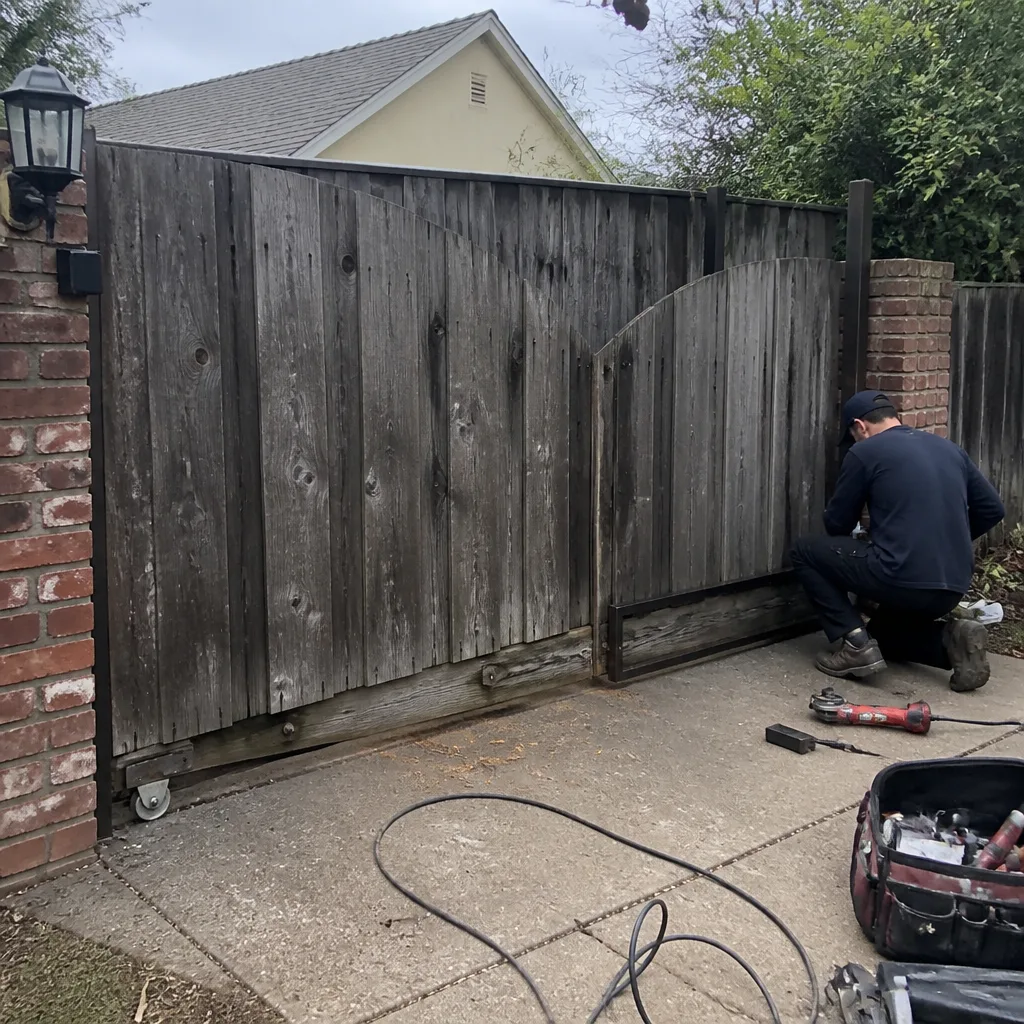 Before
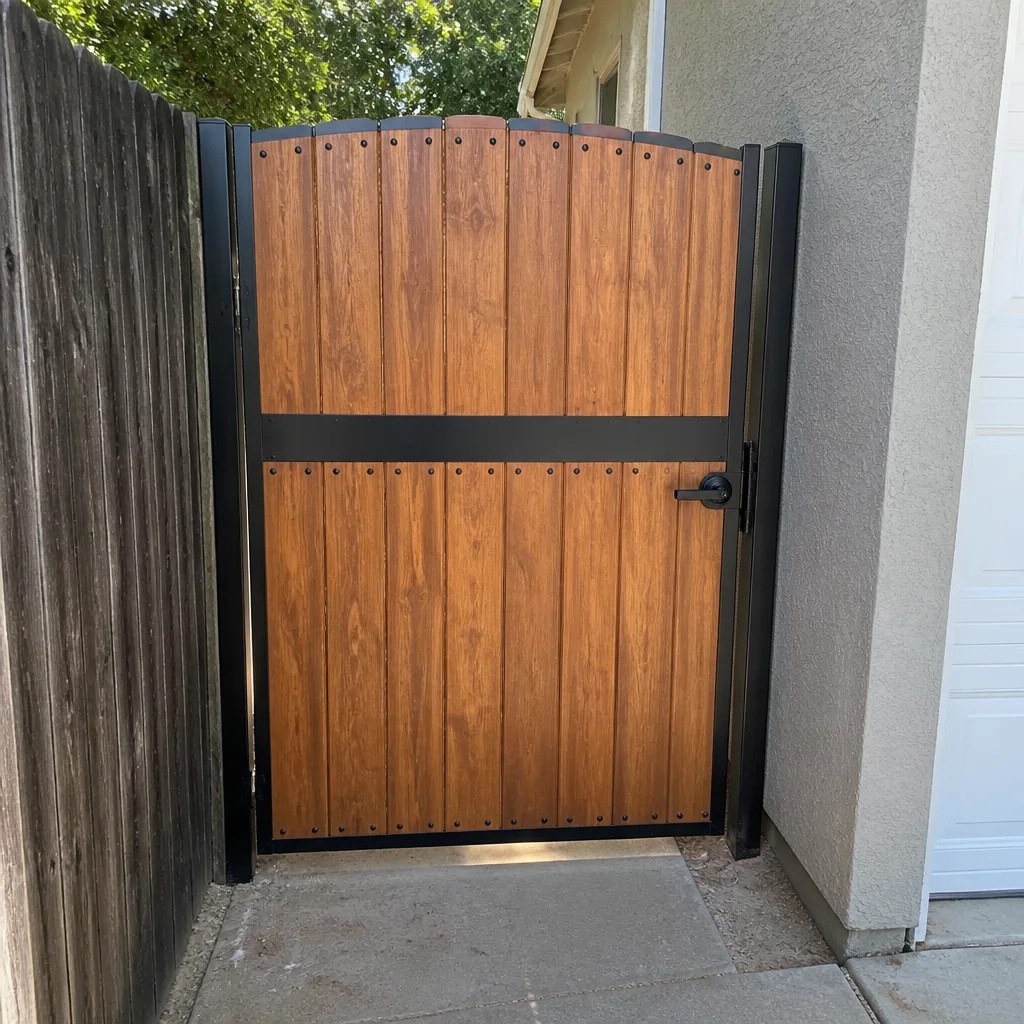 After
After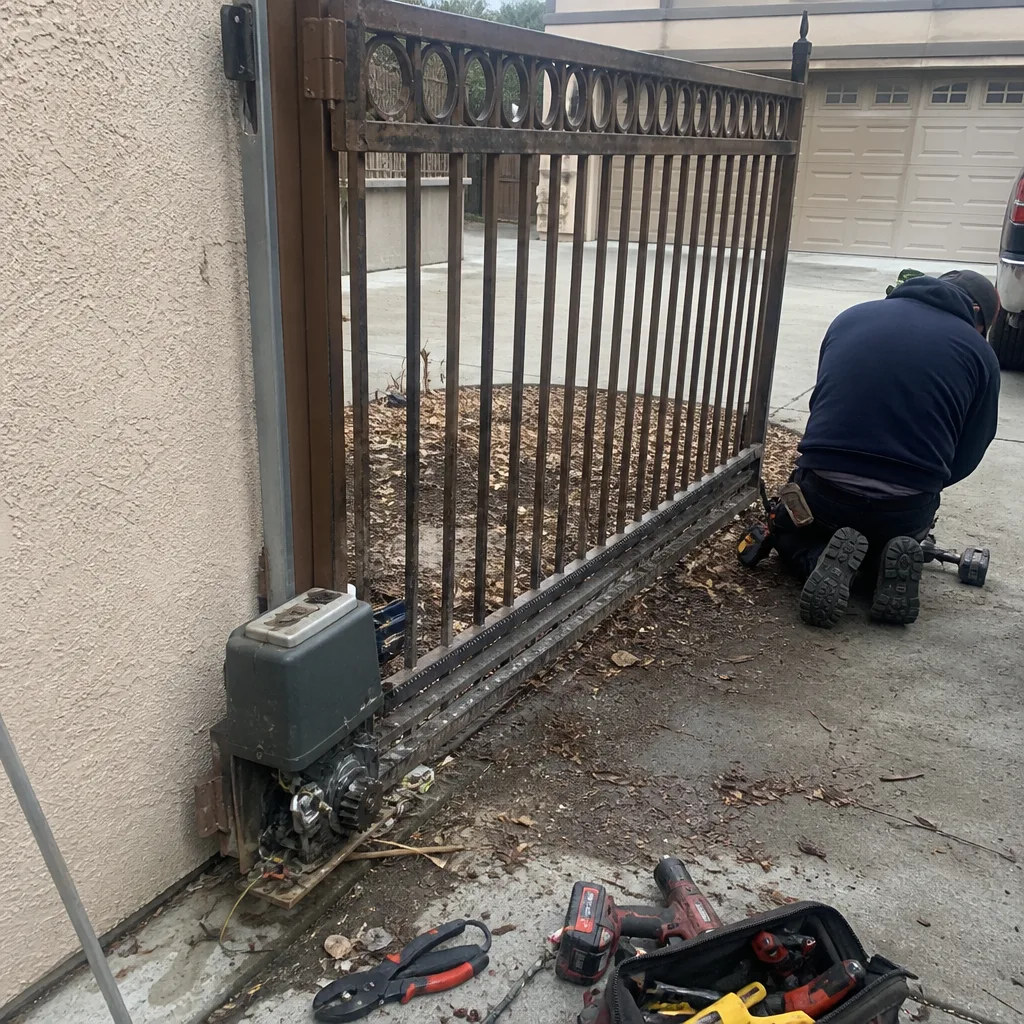 Before
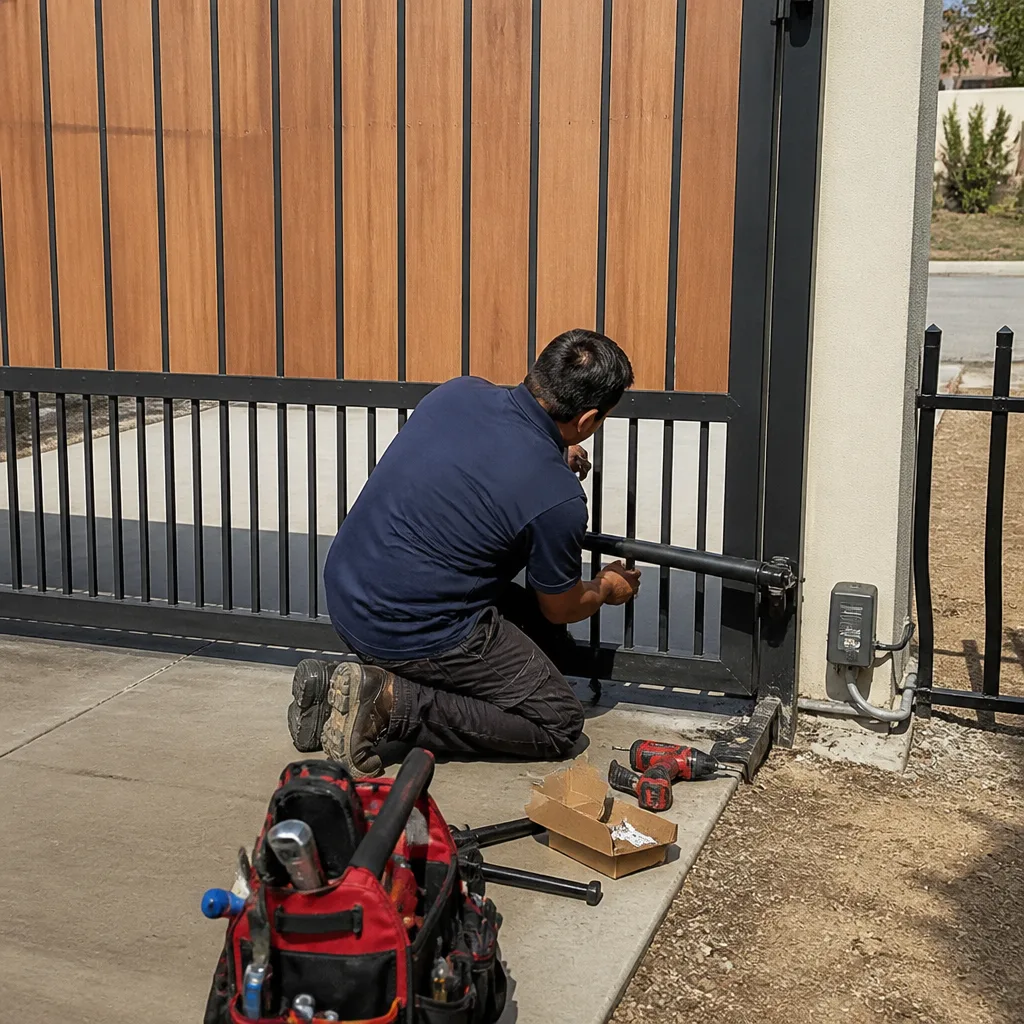 After
After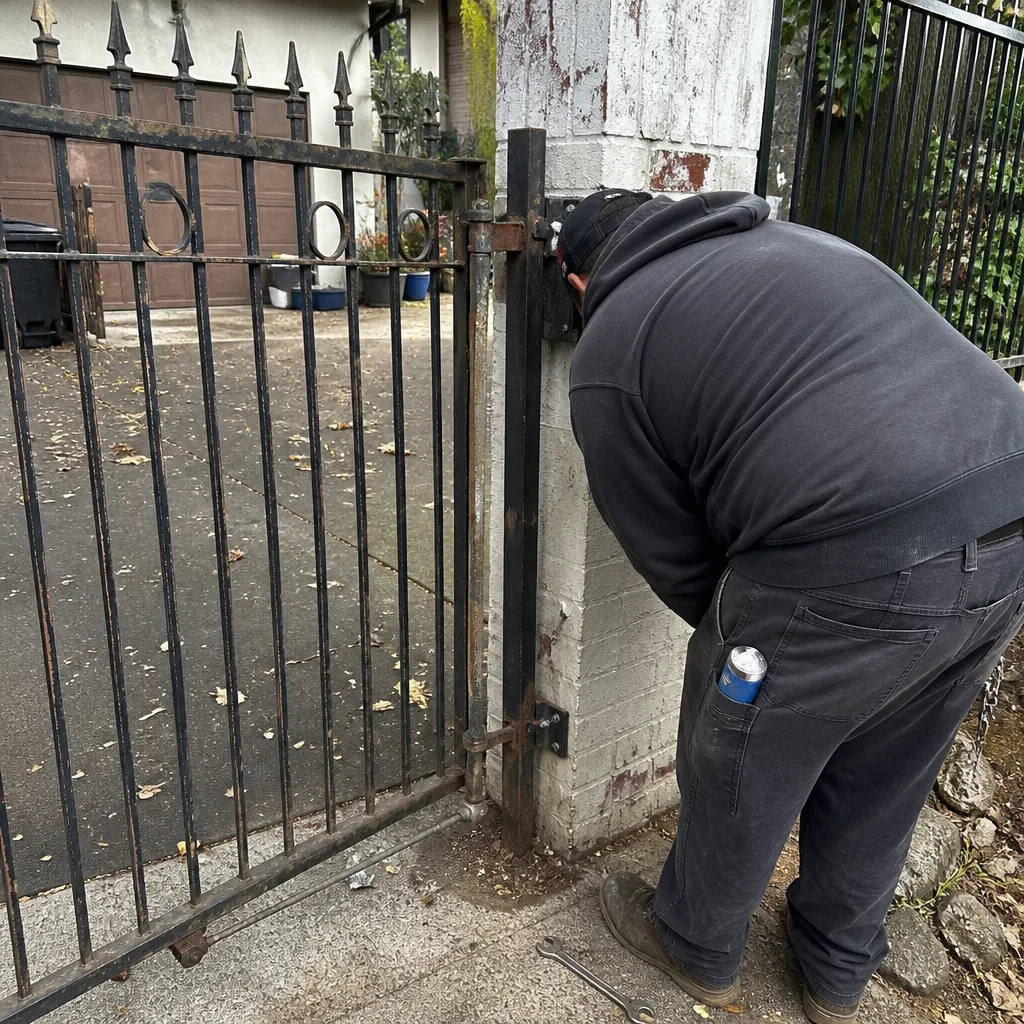 Before
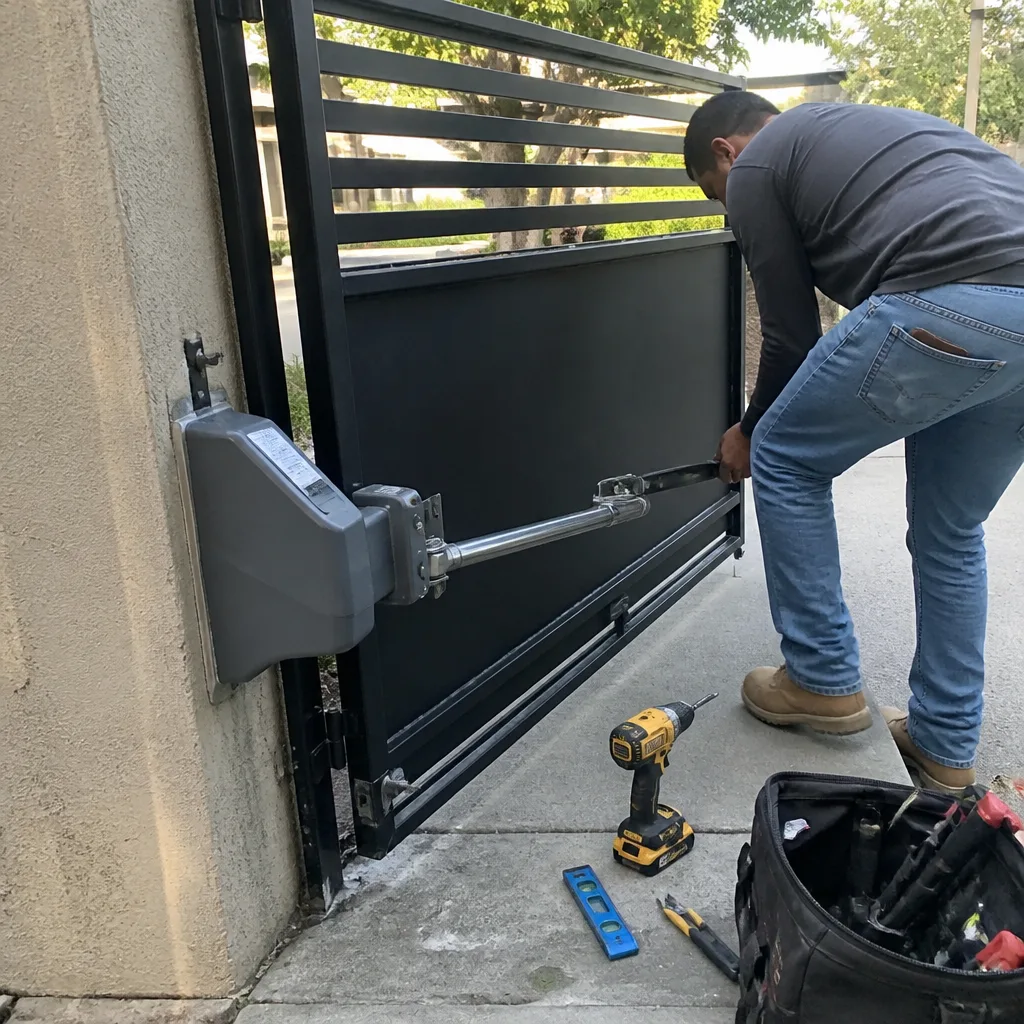 After
After